2026-05-26
Content
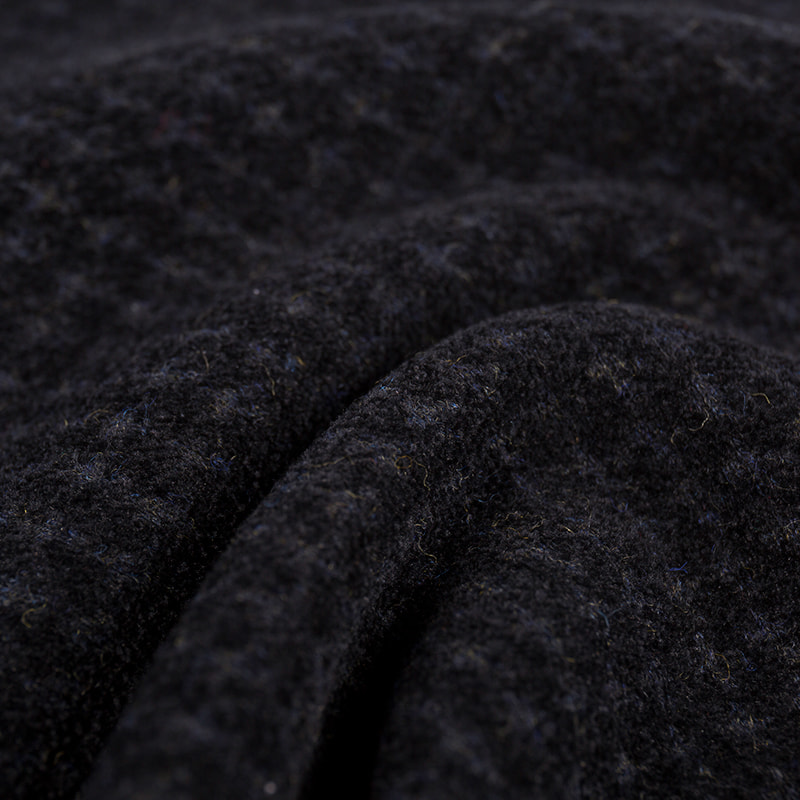
1. The tightly woven wool structure presents a significant steric hindrance to dye molecules due to the reduced interstitial space between the highly twisted yarns.
2. When evaluating how high-density weaving affects dye exhaustion rates, engineers observe that the liquor ratio must be precisely managed to ensure even pigment distribution across the compact warp and weft interface.
3. For tightly woven wool, the diffusion coefficient of acid dyes is lower than in loose knits, requiring extended dwell times at the boiling point to achieve deep shade consistency.
4. The impact of fabric tightness factor on dye uptake necessitates the use of leveling agents that reduce the surface tension of the dyebath, allowing pigments to bypass the hydrophobic epicuticle layer of the wool fiber.
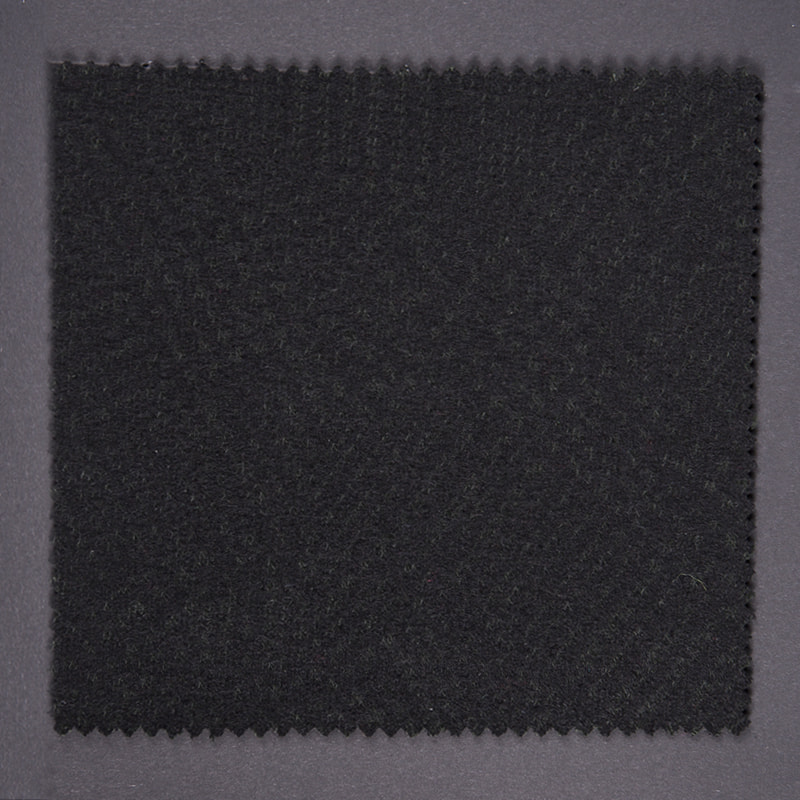
1. A primary technical advantage of tightly woven wool is its naturally low Ra surface finish, which is achieved through the mechanical locking of fibers during the high-tension weaving process.
2. Investigating why tightly woven wool feels smoother than standard weaves reveals that the increased thread count limits fiber protrusion, effectively reducing the micro-roughness measured by tactile profilometry.
3. Achieving a superior Ra surface finish on high-density wool often involves a combination of singeing and decatizing, which stabilizes the tensile strength while flattening the keratin scales.
4. The correlation between weave density and light reflectance in tightly woven wool results in a sophisticated semi-luster effect, as the flat surface minimizes diffuse scattering of incident light.
1. The tensile strength of tightly woven wool is significantly higher than open-weave alternatives, as the friction between overlapping yarns creates a self-reinforcing structural grid.
2. Testing the abrasion resistance of tightly woven wool via Martindale cycles (ISO 12947-2) consistently yields results exceeding 50,000 rubs, making it ideal for high-pressure tailoring applications.
3. Optimizing dimensional stability in tightly woven wool involves the permanent setting of the yarn's internal stress, which prevents residual shrinkage during subsequent steam pressing or dry cleaning.
4. Material Performance Comparison Table:
| Engineering Metric | Standard Woven Wool | Tightly Woven Wool |
| Air Permeability (mm/s) | 150 - 300 | 10 - 50 (ISO 9237) |
| Dye Exhaustion Rate (%) | 95% in 60 min | 88% - 92% in 90 min |
| Ra Surface Finish (microns) | > 15.0 | < 8.0 |
| Pilling Resistance (Grade) | 3 | 4 - 5 (ISO 12945-2) |
1. The natural water repellency of tightly woven wool is a physical phenomenon where the high-density weave prevents water droplets from penetrating the pores, leveraging the fiber's natural lanolin remnants.
2. Maintaining breathability in high-density wool fabrics (ISO 11092) is possible because the keratin core remains hygroscopic, allowing molecular-level moisture vapor transmission despite the physical wind-resistant barrier.
3. Why tightly woven wool is preferred for performance tailoring stems from its ability to maintain a crisp Ra surface finish even in high-humidity environments, resisting the "puckering" associated with lower-density textiles.
1. Does the high density make the wool harder to dye?
Yes. Because tightly woven wool has fewer open channels, dye molecules take longer to reach the fiber core. This requires precise temperature ramping and specialized surfactants to ensure the color is not just on the surface (ring dyeing).
2. Is tightly woven wool naturally waterproof?
It is highly water-resistant. The tightly woven wool structure creates a physical barrier that causes water to bead off, though it lacks the absolute hydrostatic head of a laminated membrane.
3. How does density affect the pilling of wool?
High density reduces pilling. By locking the fibers tightly into the yarn structure, there is less friction-induced fiber migration to the surface, maintaining a smooth Ra surface finish over time.
4. What is the typical thread count for "tightly woven" status?
In fine worsted wool, this usually refers to fabrics with a warp/weft density exceeding 40 threads per cm, often utilizing Super 100s to Super 120s yarn counts.
5. Can tightly woven wool be machine washed?
Unless specifically treated with a Hercosett process, most tightly woven wool should be dry cleaned to avoid felting, as the high-density structure can lock in wrinkles if agitated in water.
1. ISO 11092: Textiles — Physiological effects — Measurement of thermal and water-vapour resistance.
2. ISO 12947-2: Textiles — Determination of the abrasion resistance of fabrics by the Martindale method.
3. AATCC TM22: Water Repellency — Spray Test for textile surface structures.
Related Products

© 2024 Suzhou Aodejia Textile Technology Co., Ltd. All Rights Reserved.





 English
 Español