2026-04-15
Content
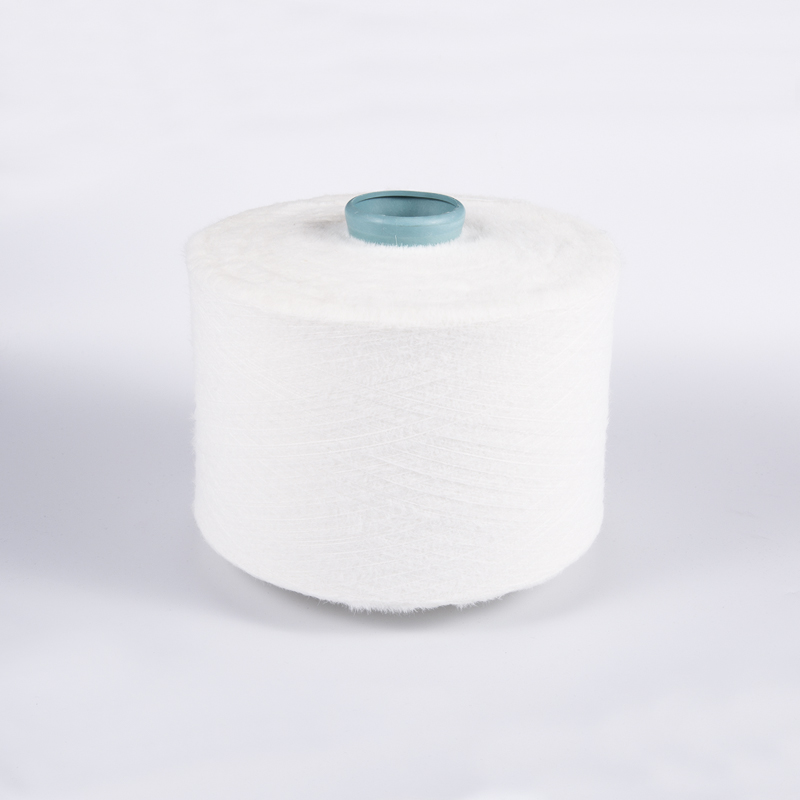
Procurement decisions in the textile industry depend on material quality, cost predictability, and supplier reliability. White chunky chenille yarn sits at the intersection of high consumer demand and broad industrial applicability. This article provides a technical and commercial evaluation of the material, designed for B2B buyers, wholesale distributors, and product developers who need factual benchmarks before committing to a purchase order.
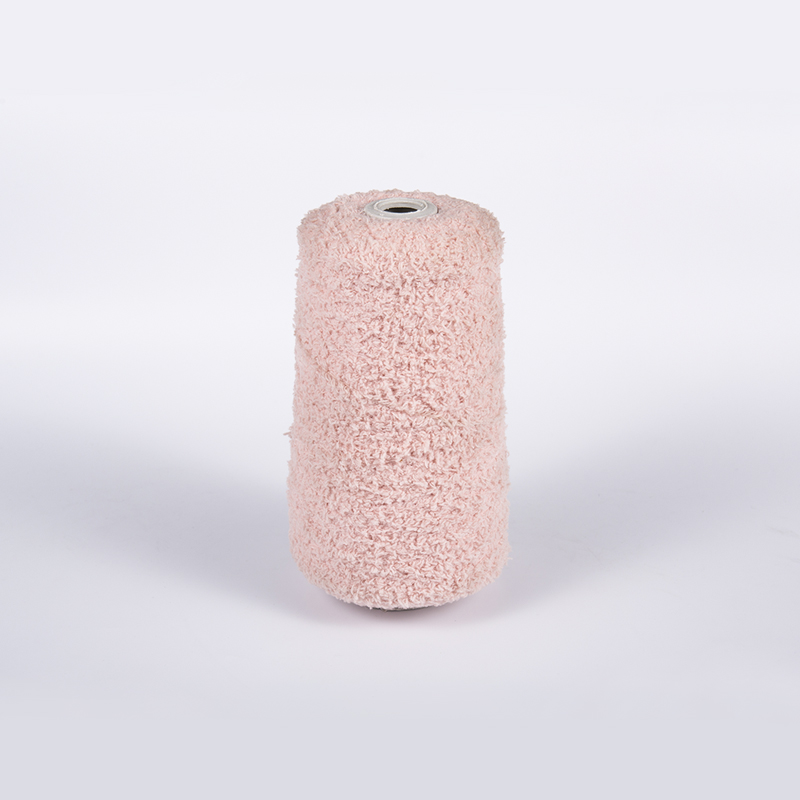
Chunky chenille yarn is a pile yarn constructed by twisting short fiber lengths — called "pile" — between two core threads, then securing them by counter-twisting. The result is a dense, velvety surface texture that traps air and creates softness without heavy weight per unit length. The pile fibers are typically cut to uniform lengths between 2 mm and 5 mm before the twist is locked.
Common fiber inputs include:
The "chunky" classification refers to yarn weight. In the Craft Yarn Council (CYC) standardized system, chunky yarn falls into Category 5 (Bulky) or Category 6 (Super Bulky), with a recommended needle or hook size of 9 mm and above. This weight class produces a higher stitch definition and faster project completion — both commercially valuable properties.
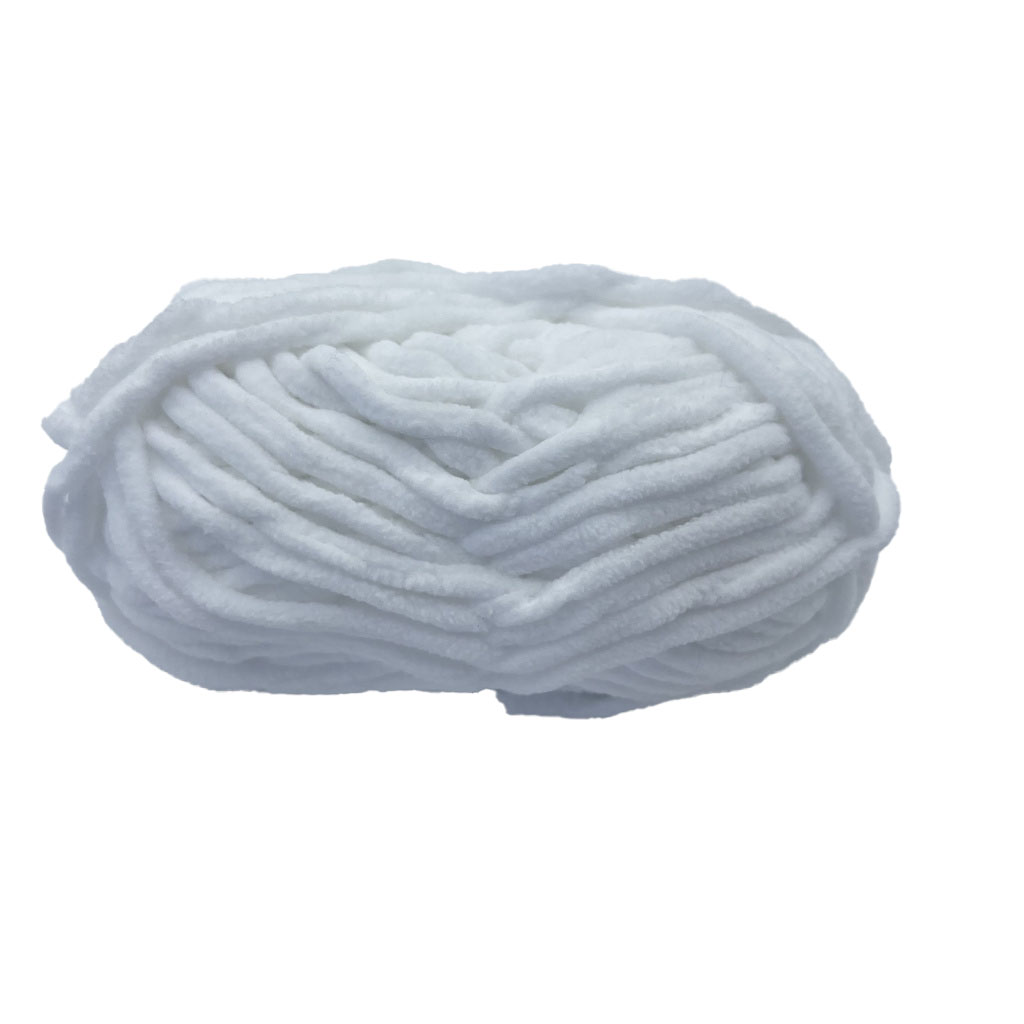
For wholesale buyers, yarn weight consistency across production batches is a critical quality metric. A Category 6 chenille yarn typically runs at approximately 100–130 meters per 100 grams. Deviation beyond ±5% across batches creates downstream problems in knitting machine calibration and hand-production yield estimates. Buyers should request a Certificate of Analysis (CoA) confirming weight per unit length (WPL) for each shipment lot.
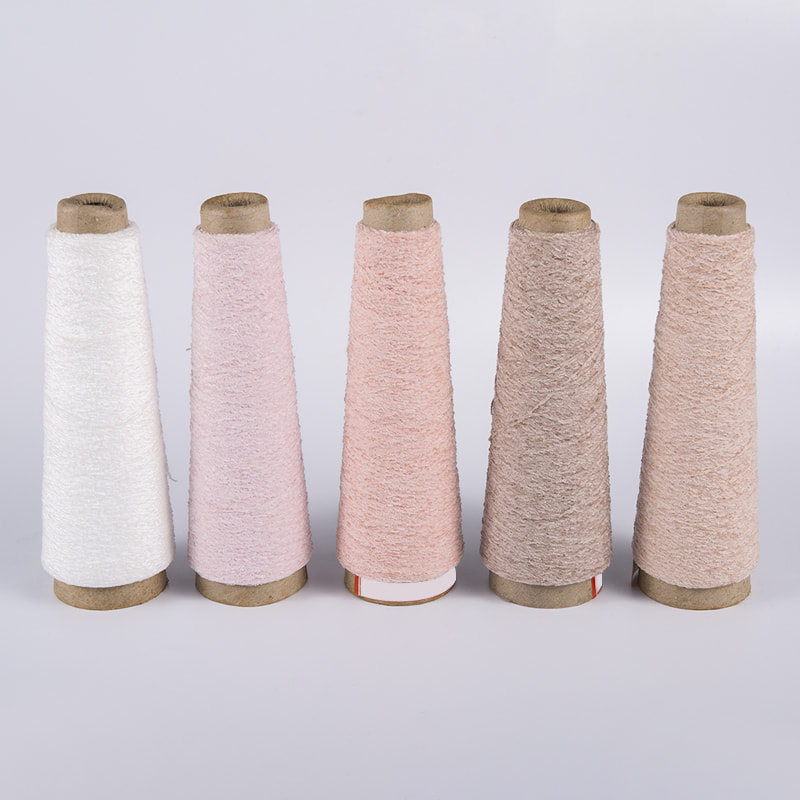
White chunky chenille yarn is the most versatile base SKU in any wholesale catalog. The reason is dye compatibility. An undyed or optically brightened white yarn can be over-dyed by the buyer's production facility at any point in the supply chain. This gives distributors and manufacturers maximum flexibility without carrying inventory in every color variant.
White also dominates specific end-use categories:
Wholesale buyers often compare chenille to conventional chunky yarn alternatives. The differences are significant across several technical and commercial dimensions. The table below summarizes the most relevant parameters for procurement decisions.
| Property | White Chunky Chenille Yarn | Standard Chunky Acrylic Yarn | Chunky Wool Yarn |
|---|---|---|---|
| Surface texture | Velvety pile, ultra-soft | Smooth to slightly textured | Rustic, fibrous |
| Typical fiber | Polyester or cotton | 100% acrylic | Wool or wool blend |
| Weight category (CYC) | 5–6 (Bulky / Super Bulky) | 5–6 (Bulky / Super Bulky) | 4–6 (varies) |
| Pilling resistance | Moderate (pile can shed) | High | Moderate |
| Dyeing flexibility | High (white base ideal) | High | High (requires mordant) |
| Cost index (relative) | Medium | Low | High |
| Primary use case | Blankets, décor, baby products | General knitwear | Outerwear, accessories |
When sourcing chunky chenille yarn wholesale, buyers must establish clear technical and commercial criteria before issuing a purchase order. Relying on product descriptions alone exposes buyers to batch inconsistency and specification drift. The following checklist reflects standard due diligence in textile procurement:
Blanket production is the single largest application for chunky chenille yarn for blankets in the wholesale segment. Yardage requirements depend on blanket dimensions and knitting method. The table below provides reference estimates for standard blanket sizes using arm-knitting or large-needle hand production.
| Blanket Size | Approx. Yarn Required (grams) | Approx. Yardage (at 110 m/100g) | Estimated MOQ for 100 units (kg) |
|---|---|---|---|
| Baby (90 x 90 cm) | 400–500 g | 440–550 m | 45–50 kg |
| Throw (120 x 150 cm) | 700–900 g | 770–990 m | 70–90 kg |
| Full/Queen (150 x 200 cm) | 1,100–1,400 g | 1,210–1,540 m | 110–140 kg |
| King (200 x 220 cm) | 1,600–2,000 g | 1,760–2,200 m | 160–200 kg |
These figures assume a standard arm-knitting gauge and do not account for fringe or finishing material. Add a 10–15% buffer to all estimates for waste, sampling, and production variance.
White chunky chenille yarn for arm knitting requires specific handling considerations that differ from needle or loom production. Because arm knitting applies uneven tension through the wrist and elbow joints, pile integrity is more susceptible to distortion during production than in machine-made goods.
Key technical recommendations for arm-knitting production at scale:
Texture and softness are the primary sensory properties that drive consumer repurchase in chenille-based products. For wholesale buyers, evaluating these properties before a large order is essential. The following methods do not require laboratory equipment and can be applied during supplier visits or on received samples.
Chunky chenille yarn texture softness comparison can be conducted using three practical tests:
For infant product sourcing, additionally request OEKO-TEX Standard 100 or equivalent certification to confirm the yarn is free from harmful substances at the relevant product class level.
Most commercially available white chunky chenille yarn in wholesale volumes is made from 100% polyester microfiber or a polyester-cotton blend. Polyester dominates because it offers consistent pile behavior, low shrinkage, and compatibility with a wide range of dyeing processes. Cotton-based options are available but typically at a higher price point and with lower availability in large lot sizes.
For chunky chenille yarn wholesale, typical MOQs range from 50 kg to 200 kg per color per SKU, depending on the supplier and yarn specification. Buyers ordering white (undyed) yarn often access lower MOQs because white is a stock base that does not require custom dye runs. Some suppliers offer mixed-color MOQs that count toward a single minimum, which can benefit smaller distributors.
A standard throw blanket measuring approximately 120 x 150 cm requires between 700 and 900 grams of chunky chenille yarn for blankets, assuming a bulky weight yarn running at approximately 110 meters per 100 grams. Buyers planning batch production should add a 10–15% overage buffer to account for sampling, waste, and gauge variation between production workers.
All chenille yarns shed to some degree because the pile is mechanically anchored rather than chemically bonded. Shedding in white chunky chenille yarn is most pronounced in the first few wash cycles and during initial use. To minimize shedding, buyers should source yarn with a high pile density and tight core twist. Finished products benefit from a cold-water wash cycle with mild agitation before sale or delivery to the end consumer, which removes loose surface fibers without damaging the pile structure.
Related Products

© 2024 Suzhou Aodejia Textile Technology Co., Ltd. All Rights Reserved.





 English
 Español