2026-08-24
Content
For standard chunky yarn (weight category #5), the recommended crochet hook size typically falls between 6.5 mm and 9 mm (U.S. sizes K-10½ to M-13). This is the industry standard range, but the exact size depends on your pattern, yarn fibre, and desired fabric drape. For super bulky yarns, you will need 9 mm or larger.
The Craft Yarn Council standard yarn weight system places chunky yarn in Category 5, with a recommended hook metric size range of 6.5-9 mm and a crochet gauge of 8-11 single crochet stitches per 4 inches (10 cm). Many yarn labels will suggest a specific hook size within this range, but consider it a starting point rather than a rule.
Before selecting a hook, it helps to clarify what "chunky" actually means. In the U.S. system, chunky yarn is synonymous with "bulky" and is classified as a #5 weight yarn. In the U.K. and Australia, this same thickness is often called 12-ply yarn.
The term "chunky" can sometimes be used loosely as an adjective rather than a strict weight category, leading to confusion. For example, some yarn companies call any yarn thicker than worsted "chunky," even if it technically falls into the super bulky (#6) or jumbo (#7) categories. For crochet, knowing the official category ensures you start with the right hook size.
| Yarn Category | Metric Hook Size | U.S. Hook Size | Gauge (sc per 4") |
|---|---|---|---|
| #5 Chunky / Bulky | 6.5 - 9 mm | K-10½ to M-13 | 8 - 11 stitches |
| #6 Super Bulky | 9 - 15 mm | M-13 to Q | 5 - 9 stitches |
| #7 Jumbo | 15 mm and larger | Q and larger | Fewer than 5 stitches |
This table provides general guidelines only. Always check your pattern and yarn label for specific recommendations.
Choosing the optimal hook involves more than looking at a label. Several interrelated factors affect your decision.
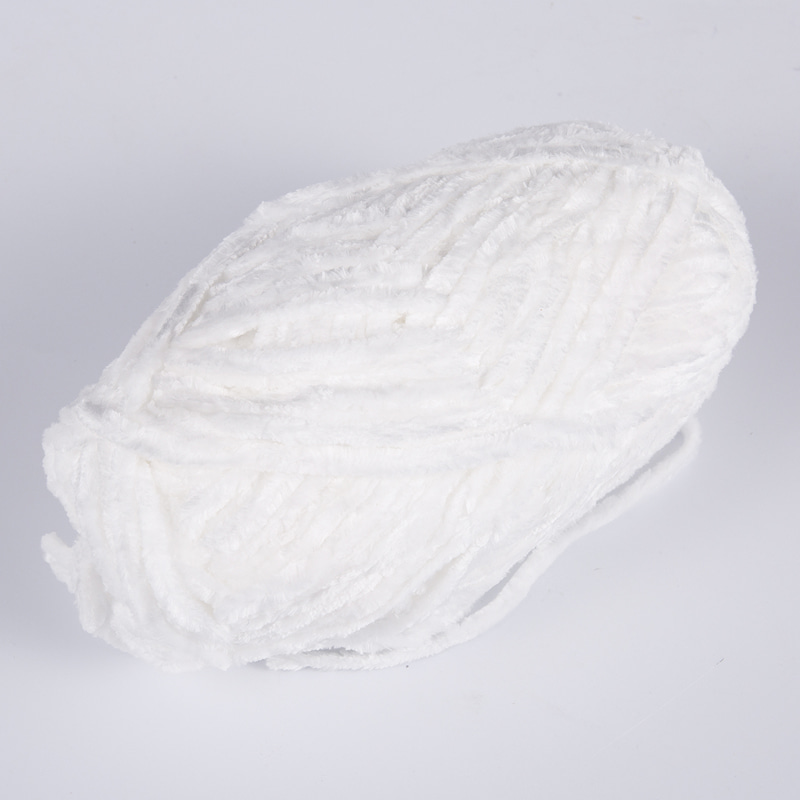
Fibre content significantly impacts how your yarn behaves. Animal fibres like wool are naturally elastic and can be worked at a slightly tighter gauge without losing their bounce. Plant-based fibres like cotton have less give and may require a slightly larger hook to maintain stitch flexibility. Many chunky yarns are also available in chenille or velvet textures, which can be challenging to work with; a slightly larger hook (e.g., 8 mm instead of 6.5 mm) can help with stitch visibility.
Your crochet pattern is often the deciding factor. Pattern designers design with a specific gauge in mind to achieve the dimensions and drape they intend. If the pattern calls for an 8 mm hook and you use a 6.5 mm hook without adjusting your stitch count, your project will be smaller and stiffer than desired.
Hook size selection is a creative choice that affects the final fabric characteristics.
Relying on a gauge swatch is critical for any project where fit matters. The gauge on your pattern is usually stated as a number of stitches and rows over a 4-inch (10 cm) square.
How to crochet a gauge swatch for chunky yarn:
The standard crochet gauge range for chunky yarn is 8 to 11 single crochet stitches per 4 inches. This is a wide range, which is why making a swatch is essential for accurate sizing.
For blankets, drape is the primary concern. Use the larger end of the recommended range (8-9 mm). A looser fabric is also easier on the hands for large projects. If you are using a chenille-style chunky yarn, an 8 mm hook can be a comfortable middle ground.
Dense fabric helps maintain shape and keep stuffing contained. In this case, a smaller hook prevents holes from forming between stitches.
Wearables require a balance of drape and structure. Match the pattern's recommended hook size and complete a gauge swatch. The yarn label's recommendation is a good starting point.
Scarves are forgiving and allow for experimentation. Use a larger hook for a softer, more flexible fabric or a smaller hook for a denser, warmer accessory.
Chunky yarns vary by fibre, ply structure, and texture. A single-ply roving yarn will behave differently than a multi-ply twisted or chenille yarn. Single-ply yarns are less durable and prone to pilling, while chenille can "worm" (create loops) if your hook is too small.
This is a common issue among crocheters switching from worsted weight yarn. A hook that is too small creates a tight, stiff fabric that is difficult to work. If your hand hurts, your hook is probably too small. The result is a fabric that lacks drape.
Even for blankets, gauge affects yarn consumption and final size. A 0.5 mm difference in hook size can change your project's dimensions by several inches.
Crocheters have different levels of tension. If you crochet tightly, you need a larger hook than the pattern suggests to achieve the same gauge. If you crochet loosely, you may need a smaller hook. Always adjust based on your swatch.
For standard chunky yarn (weight #5), use a hook between 6.5 mm and 9 mm. Check your pattern or yarn label for specific recommendations.
You can, but it is generally too small. A 5.5 mm hook is recommended for medium (worsted) weight yarn. Using it with chunky yarn will create a very stiff fabric and make crocheting difficult. Exceptions may apply for amigurumi where a tight fabric is essential.
A hook that is too large creates a loose, holey fabric with poor stitch definition. The project may lack structure and appear messy. However, this can be a design choice for lacy projects.
A bigger hook produces larger stitches, so you use fewer stitches per inch but more total yardage overall to achieve the same project dimensions. A smaller hook uses more stitches per inch, which also increases total yardage.
In the U.S., yes. Both terms refer to weight category #5. In the U.K., "chunky" is roughly equivalent to U.S. "bulky," but terminology varies, so it is best to refer to the standard weight system.
Chenille yarn benefits from a slightly larger hook to prevent "worming." Use the larger end of the range (8 mm to 9 mm) and maintain a relaxed tension.
Related Products

© 2024 Suzhou Aodejia Textile Technology Co., Ltd. All Rights Reserved.





 English
 Español