2026-04-02
Content
For textile engineers and procurement managers, raw yarn is not a simple commodity. It is the foundation of fabric performance, dyeing consistency, and production efficiency. Selecting the wrong material can lead to yarn breakage, uneven texture, and costly delays. This article provides an engineer-level analysis of key selection criteria, testing methods, and common pitfalls in the supply chain.
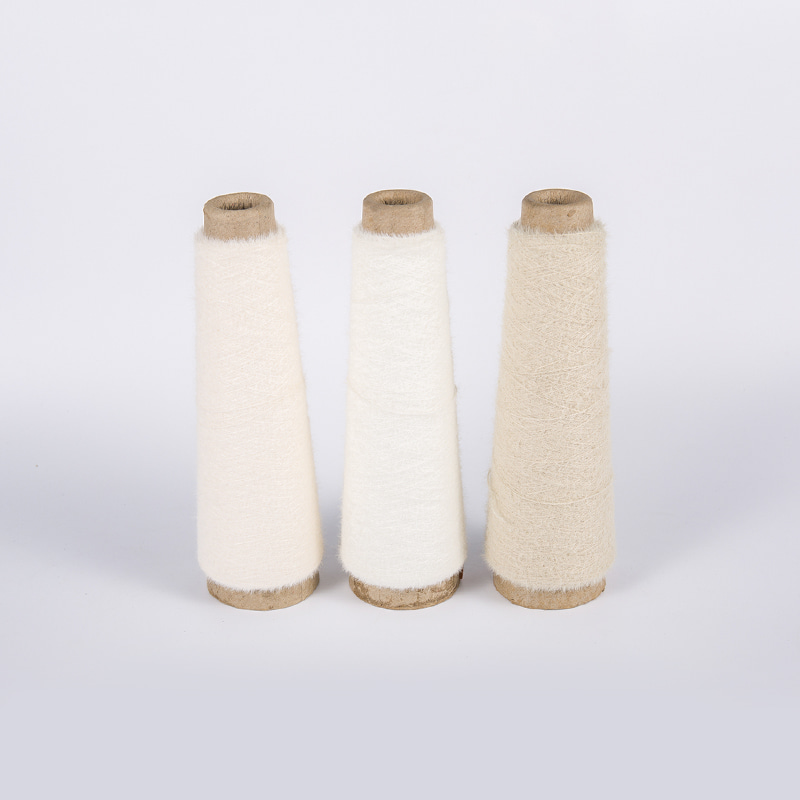
Before sourcing, professionals must define technical parameters. The term raw yarn typically refers to the undyed, unfinished state immediately after spinning. However, its properties vary significantly based on fiber origin, count, twist level, and tensile strength.
The base fiber dictates the yarn's physical limits. Cotton, polyester, and blends each have distinct moisture regain, abrasion resistance, and thermal behavior. For instance, a high-tenacity polyester raw yarn differs fundamentally from a combed cotton variant in terms of elongation at break and static charge buildup.
Twist level directly affects strength and handle. Too low a twist leads to weak points; too high a twist creates a harsh feel and potential torque issues. Engineers use the twist multiplier (TM) to calculate optimal values based on end use. Uniformity, measured by the coefficient of variation (CVm), is equally critical.
Quality control for raw yarn goes beyond visual inspection. Modern mills employ standardized testing to quantify performance. Below are the essential parameters that buyers should verify in technical data sheets.
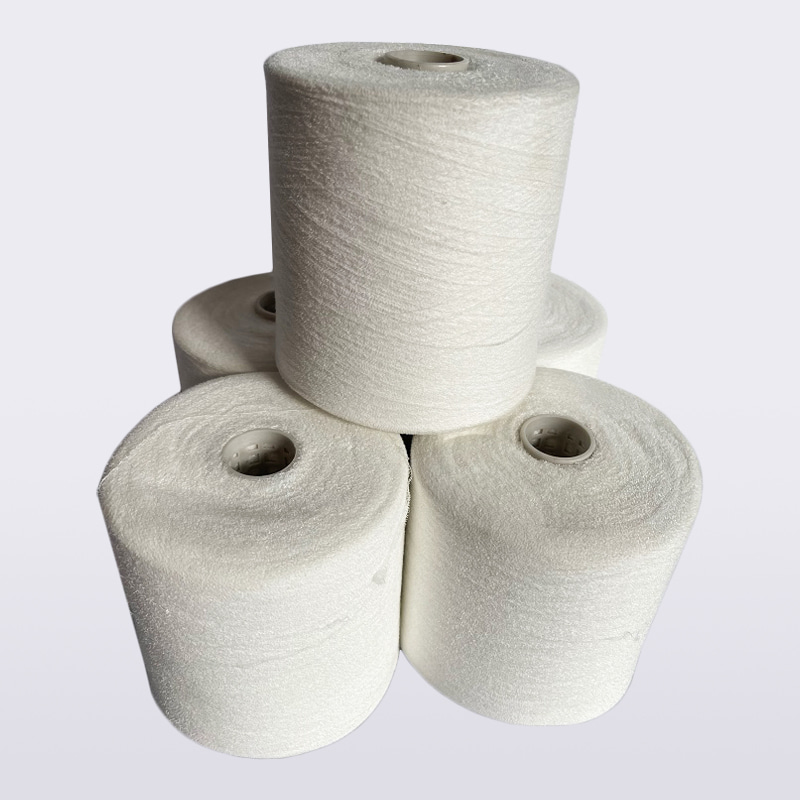
Single-end strength (measured in cN/tex) determines how the yarn behaves in high-speed processes like warping or circular knitting. A standard requirement for weaving raw yarn is a minimum strength of 20 cN/tex for cotton and 50 cN/tex for polyester. Elongation at break should be consistent across lots to avoid tension variations.
Uneven mass distribution causes thin and thick places. Uster® statistics provide industry benchmarks. For a fine-count raw yarn, the acceptable thin places (-50%) per kilometer are often below 10. Higher imperfections lead to end breaks and fabric defects.
The following table outlines standard tests used in yarn evaluation. These methods are recognized by international standards organizations.
| Parameter | Test Method | Typical Instrument | Acceptance Range (Cotton 30s Ne) |
|---|---|---|---|
| Strength | ASTM D2256 | Single-end tensile tester | > 300 cN |
| Evenness | ASTM D1425 | Uster Tester | CVm < 16% |
| Twist | ASTM D1423 | Twist tester | 18-22 tpi |
| Hairiness | ASTM D5647 | Uster Zweigle | H < 6.0 |
Each of these tests requires calibrated equipment and trained technicians. Buyers should request lot-specific certificates, not generic mill averages, to ensure traceability.
Purchasing raw yarn for industrial volumes introduces variables beyond physical quality. Lead time, packaging, and lot consistency directly impact production planning.
Large textile operations require that each delivery of raw yarn remain traceable to a specific spinning lot. Mixing different lots without testing can create dyeing variations. Engineers often enforce a policy of testing each lot for shade affinity before full-scale processing.
Yarn cones or bobbins must be protected from moisture and dust. Packaging should prevent abrasion during transit. For premium raw yarn for knitting, even minor surface damage can cause needle breakage. Storage areas should maintain relative humidity below 65% to avoid mold and strength degradation.
Even with careful selection, process engineers encounter issues. Understanding the root cause is essential to avoid production losses.
If breakage exceeds 15 ends per 100,000 machine revolutions, the cause is often either low tensile strength or excessive slubs. Testing raw yarn from the same lot can isolate whether the fault is material-specific or machine-related. A sudden increase in breakage after changing lots points to inconsistent yarn quality.
Dye bars or streaks after processing usually stem from uneven fiber maturity or twist variation. For dyed applications, it is recommended to source custom-count raw yarn for specialty textiles with certified dye affinity. Pre-treatment testing can mitigate risks.
Raw yarn refers to the state immediately after spinning, without any dyeing, heat-setting, or waxing. Finished yarn undergoes additional processes like singeing, mercerizing, or lubrication to prepare it for specific fabric constructions. Engineers should match the processing stage to their equipment requirements.
Request a mill test report that includes evenness (CVm), strength (cN/tex), twist per inch, and imperfection count. For critical applications, obtain a 500-gram sample from the exact production lot and run a pilot batch on your own machinery. This confirms compatibility with your process parameters.
Inconsistent twist levels and lot-to-lot shade variation are the most frequent issues. Always establish a technical specification sheet with tolerances. Do not rely solely on price negotiation; evaluate the supplier’s testing equipment and quality system certifications to ensure long-term stability.
Yes, but it depends on the yarn's tensile strength and surface characteristics. Warp knitting requires higher tensile strength and lower friction. For this application, high-tenacity raw yarn for industrial fabrics is often the preferred choice. A lubricant may need to be applied during warping to reduce abrasion.
Related Products

© 2024 Suzhou Aodejia Textile Technology Co., Ltd. All Rights Reserved.





 English
 Español