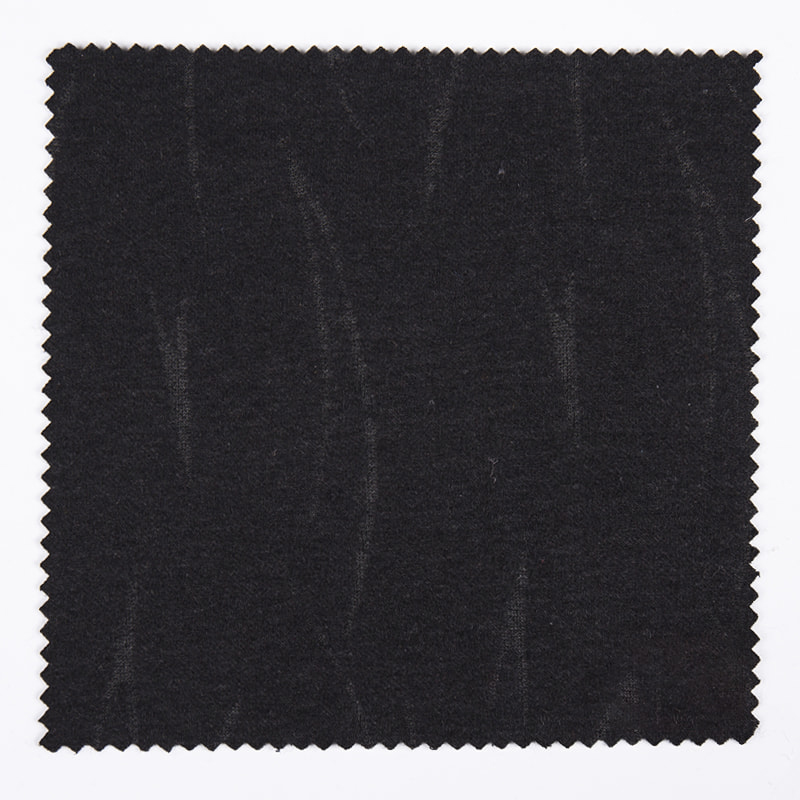
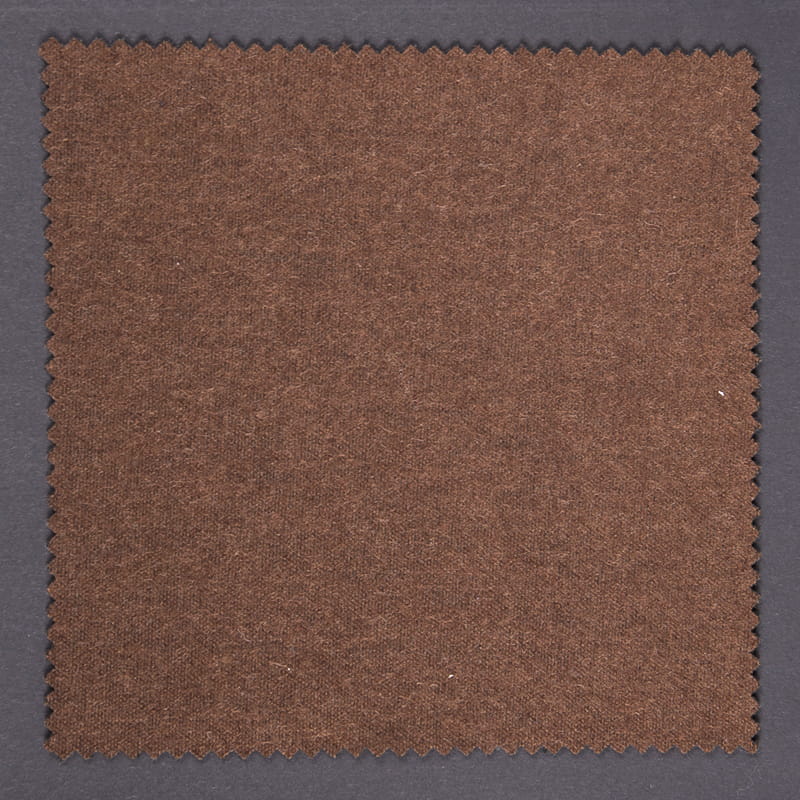
Every fabric begins with raw yarn. Whether it is a dense corduroy worn through a decade of winters, a silky chenille throw draped across a luxury hotel sofa, or a precisely structured jacquard panel on a designer coat — the fiber composition, spinning architecture, twist level, and structural integrity of the raw yarn at the foundation of that fabric determines everything that follows: its hand, its drape, its durability, its colorfastness, and its behavior at every stage of processing from loom to finished garment.
For textile product developers, fabric mills, garment manufacturers, and B2B sourcing teams, understanding raw yarn at a technical level is not academic — it is a commercial necessity. The difference between a yarn that produces a flawless, consistent chenille pile and one that sheds, pills, or felts under normal consumer use is measured in microns of fiber diameter, grams per meter of linear density, and turns per meter of twist. This article delivers an engineer-grade analysis of raw yarn technology, covering fiber science, spinning systems, fancy yarn construction, dyeing chemistry, quality testing standards, and OEM sourcing frameworks — designed to support informed procurement and product development decisions at every level of the textile supply chain.
Step 1: Five High-Traffic, Low-Competition Long-Tail Keywords
| # |
Long-Tail Keyword |
Search Intent |
| 1 |
raw yarn suppliers for fabric production |
B2B fabric mill / weaving factory sourcing |
| 2 |
fancy raw yarn manufacturer |
Decorative / specialty yarn development |
| 3 |
dyed raw yarn wholesale |
Bulk color yarn procurement for weaving or knitting |
| 4 |
custom raw yarn OEM supplier |
Private label / branded yarn development |
| 5 |
chenille raw yarn for upholstery and apparel |
Furniture / home textile / fashion procurement |
Section 1: Fiber Classification and Its Impact on Raw Yarn Performance
1.1 Natural Fibers in Raw Yarn Production
The fiber used to spin raw yarn is the single most consequential material decision in the textile product development chain. Natural fibers contribute properties — moisture absorption, thermal regulation, softness, biodegradability — that synthetic fibers replicate only partially and often at significant cost premium:
- Cotton (Gossypium hirsutum and G. barbadense): The dominant natural fiber globally, accounting for approximately 25% of world fiber consumption. Cotton fiber length (staple) ranges from 22 mm (short-staple, used in coarser yarns) to 38 mm+ (extra-long-staple, Egyptian and Pima cotton). Mean fiber diameter: 11–20 µm. Moisture regain: 8.5% at standard conditions (65% RH, 20°C). Tenacity: 3.0–5.0 cN/tex (dry), increasing to 110–120% of dry tenacity when wet — the unique wet-strength advantage that makes cotton ideal for laundered apparel. Raw yarn spun from combed, long-staple cotton (Ne 40–120 ring-spun) represents the technical baseline for premium shirting, fine knitwear, and woven apparel fabrics.
- Wool (Ovis aries): Mean fiber diameter 15.5–45 µm across grades (IWTO-12). Crimp frequency (2–12 crimps/cm) creates natural bulk and elastic recovery that no synthetic fiber fully replicates. Moisture regain: 16–18% — absorbing moisture vapor without feeling wet, contributing to the thermoregulation performance of wool garments across temperature ranges. Wool raw yarn in worsted (combed, parallel fiber, Nm 30–200) or woolen (carded, random fiber, Nm 0.5–12) spinning systems forms the foundation of suiting, outerwear, knitwear, and upholstery fabric production.
- Silk (Bombyx mori): The finest natural fiber commercially produced — 10–13 µm diameter, 400–1,500 m continuous filament per cocoon. Tenacity 3.5–5.0 cN/tex; elongation at break 15–25%. Triangular cross-section with smooth surface produces the characteristic specular luster of silk. Raw yarn (thrown silk, Nm 20–300) commands the highest price of any natural fiber used in mass textile production. The base material for premium jacquard fabrics, woven linings, and luxury apparel constructions.
- Linen (Corchorus capsularis / Linum usitatissimum): High-tenacity bast fiber (5.5–6.5 cN/tex) with very low elongation (2–3% at break) — producing fabrics with exceptional dimensional stability and stiffness. Moisture regain 12%. Low moisture retention coefficient makes linen fabric feel cooler than cotton or wool at equivalent weight — the foundation of its traditional use in warm-weather apparel and home textiles.
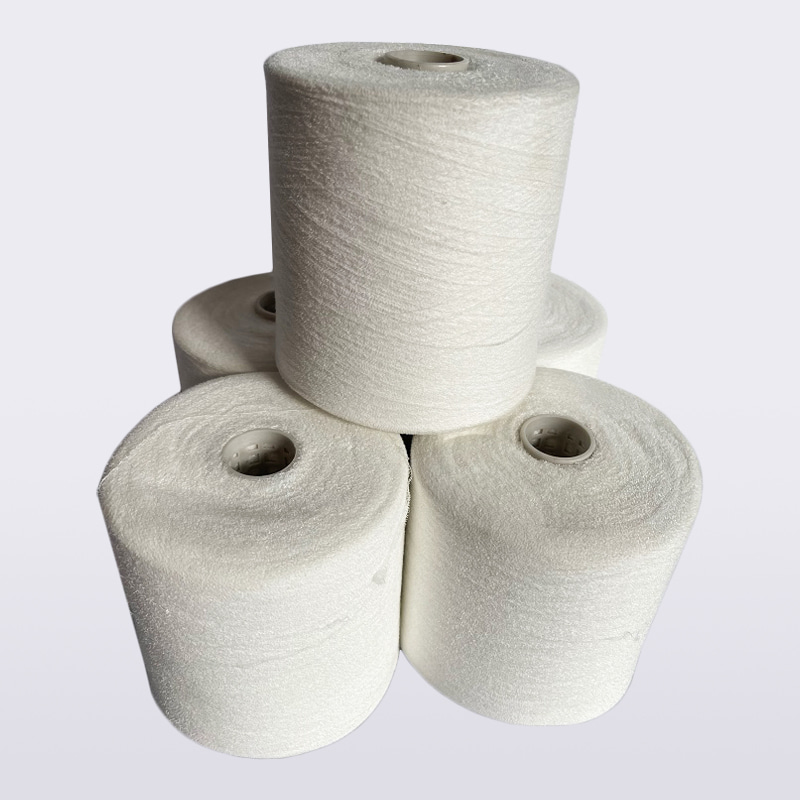
1.2 Synthetic Fibers and Man-Made Cellulosics in Raw Yarn
Synthetic and semi-synthetic fibers extend the performance envelope of raw yarn beyond the limitations of natural fiber availability, cost consistency, and functional profile:
- Polyester (PET): Regular tenacity (RT-PET): 3.5–5.0 cN/tex; high tenacity (HT-PET): 7.0–9.5 cN/tex. Moisture regain: 0.4% — essentially hydrophobic, requiring surface treatment (moisture wicking finish) for activewear. Color: dyeable with disperse dyes under heat/pressure; requires no mordant. UV resistance superior to nylon and natural fibers — maintained structural integrity after 500+ hours xenon arc exposure (ISO 105-B02). The dominant fiber in global raw yarn production by volume, used across woven fabrics, knitted fabrics, and nonwovens.
- Nylon (PA6, PA6.6): Tenacity 4.5–7.0 cN/tex; elongation 25–60%; excellent abrasion resistance (10–15% higher Martindale cycles than equivalent polyester at same denier). Higher moisture regain than polyester (PA6: 4.5%; PA6.6: 4.0%) improves comfort in skin-contact applications. Dyed with acid dyes (common platform with wool) — enabling cross-dyeing effects in nylon/wool blend raw yarn. Used in hosiery, lingerie, activewear, and technical textiles requiring maximum abrasion resistance.
- Acrylic (PAN — polyacrylonitrile): The synthetic fiber with the closest handle to wool. Bulk acrylic yarn (produced by bi-component spinning followed by steam bulking) achieves thermal insulation comparable to medium-grade wool at lower cost. Tenacity: 2.0–3.5 cN/tex; moisture regain: 1.5–2.5%. Dyed with basic (cationic) dyes — producing bright, saturated colors with excellent light fastness. The primary synthetic alternative to wool in knitted sweaters, blankets, and knitwear fabric production. Used extensively in chenille raw yarn production for its bulk, dye vibrancy, and cost efficiency.
- Viscose/Rayon (regenerated cellulose): Semi-synthetic fiber produced by dissolving wood pulp cellulose in NaOH/CS₂ (viscose process) or NMMO (lyocell/Tencel process). Moisture regain: 11–13% (viscose), 11% (lyocell). Tenacity: 2.0–3.5 cN/tex dry; significantly reduced wet (50–70% of dry tenacity) — the primary limitation for viscose in high-wash-cycle applications. Hand: soft, silky drape superior to polyester for apparel and home textiles. Dyed with reactive or direct dyes. Used in raw yarn blends with cotton, polyester, or wool to improve handle and drape at lower cost than pure natural fiber constructions.
- Elastane/Spandex (segmented polyurethane): Not used as a primary raw yarn fiber but as a functional component in core-spun and covered yarn constructions — providing 300–700% elongation and near-complete elastic recovery to fabrics that would otherwise have no stretch. Covered with polyester, nylon, or cotton. Used in stretch woven and knitted fabrics at 2–10% content by weight.
Section 2: Spinning Systems and Raw Yarn Architecture
2.1 Ring Spinning — The Premium Quality Benchmark
Ring spinning is the oldest continuous spinning technology and remains the benchmark for premium quality raw yarn. A drafted fiber strand (roving) is twisted by the rotation of a traveler running around a fixed ring, winding the twisted yarn onto a bobbin. Key technical characteristics:
- Yarn structure: Helical fiber arrangement with uniform twist distribution from core to surface. Produces the tightest, most uniform yarn structure of any spinning system — corresponding to maximum tenacity, minimum hairiness, and best surface smoothness. Ring-spun Ne 80 cotton yarn achieves tensile tenacity of 14–18 cN/tex vs. 10–13 cN/tex for rotor-spun equivalent.
- Count range: Ne 4 (coarse) to Ne 200 (very fine, for specialty voile and lace applications). Versatile across all fiber types — cotton, wool, linen, silk, and synthetic blends.
- Twist factor (αe or αm): Twist multiplier (TM) = twist per inch ÷ √count (Ne). Standard warp yarn TM: 3.5–4.5; weft yarn TM: 3.0–3.8; knitting yarn TM: 2.5–3.2. Higher TM produces firmer, stronger yarn with lower elongation; lower TM produces softer, bulkier yarn with more stretch.
- Limitation: Slowest spinning system — spindle speeds of 15,000–25,000 rpm limit production rate vs. rotor and air-jet systems. Ring-spun raw yarn commands a 15–30% cost premium over rotor-spun equivalent count and fiber type.
2.2 Open-End (Rotor) Spinning — Volume Production Efficiency
Open-end rotor spinning is the dominant production technology for medium-to-coarse count raw yarn (Ne 6–40) in cotton and synthetic/cotton blend applications. Fiber is separated into individual fibers by an opening roller, transported pneumatically into a high-speed rotor (60,000–150,000 rpm), and twisted as individual fibers are laid into the yarn groove. Key characteristics:
- Production rate: 3–8× faster than ring spinning at equivalent count — enabling significantly lower unit production cost for medium-count raw yarn. Primary cost advantage for denim fabric weft yarn, workwear fabric, and home textile applications.
- Yarn structure: Wrapper fibers (fibers that did not integrate into the yarn core) create a different surface character than ring-spun yarn — slightly more irregular, higher hairiness, lower tenacity at equivalent count. Visual and tactile difference is apparent in fine-count applications but negligible in medium counts used for corduroy, rib, and denim fabric production.
- Count range: Ne 6–Ne 40 commercial optimum. Below Ne 6, rotor geometry limits fiber beard formation; above Ne 40, ring spinning has quality advantage.
- Application: Standard choice for weft yarn in denim, corduroy, and plain weave fabrics where moderate count (Ne 7–20) and cost efficiency are the primary specification drivers.
2.3 Air-Jet Spinning — Speed and Hairiness Reduction
Air-jet spinning uses high-velocity air vortex to twist the fiber strand — producing yarn at speeds of 300–450 m/min vs. 20–35 m/min for ring spinning. The resulting raw yarn has very low surface hairiness (IRL hairiness index 30–60% lower than ring-spun equivalent) and excellent uniformity, but lower tenacity due to the predominantly parallel (low-twist) fiber core with wrapped surface fibers providing structural integrity. Used for medium-fine count (Ne 20–60) cotton and polyester/cotton blend yarn for shirting, pants, and knitwear applications where smooth surface and consistent appearance are priorities.
2.4 Vortex Spinning — Moisture Management Applications
Murata Vortex Spinning (MVS) produces raw yarn with a unique structure: a staple fiber core wrapped by helically arranged surface fibers at very high production speed (400 m/min). The exposed fiber ends at the yarn surface are significantly fewer than ring-spun yarn — producing a fabric with excellent pilling resistance (critical for knitwear and activewear) and superior moisture transport (exposed fiber ends are the primary sites of moisture vapor absorption and capillary transfer). Vortex-spun polyester/cotton blend raw yarn (65/35 or 60/40) is a preferred specification for performance polo shirts, moisture-wicking sportswear, and casual pants fabric production.
Section 3: Fancy Raw Yarn — Engineering Decorative and Functional Complexity
3.1 What Is Fancy Yarn and Why Does It Matter for Fabric Development?
Fancy raw yarn — also referred to as novelty yarn, effect yarn, or decorative yarn — is produced by intentionally introducing structural irregularity, fiber contrast, or three-dimensional ornamentation into the yarn architecture, producing visual and tactile effects not achievable with conventional uniform yarns. For fabric developers and product design teams, fancy raw yarn is a primary tool for surface differentiation — enabling fabric constructions with distinctive aesthetics that command premium positioning without the cost of complex weave structures or printing processes.
The key fancy yarn categories produced by specialist mills and their technical construction principles:
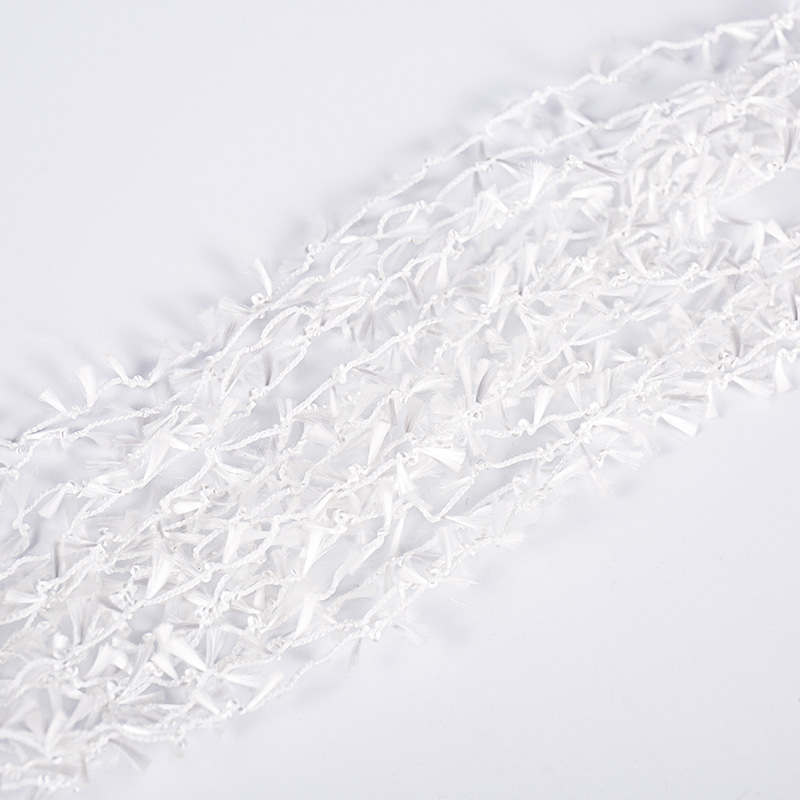
- Chenille yarn: Produced by cutting pile yarn between two core threads on a chenille yarn machine. A parallel ground yarn is first wrapped with pile fibers at right angles, then cut between the wraps to create individual pile tufts projecting radially from the core — producing the characteristic "caterpillar" profile. Pile fiber: typically acrylic, viscose, or polyester (2–6 dtex, 3–8 mm cut length). Core: twisted polyester or cotton. Pile density: 40–120 tufts/cm. Chenille yarn produces the ultra-soft, plush surface of chenille fabrics — including upholstery fabric, throws, scarves, and fashion knitwear. The pile fiber's cut ends are retained within the pile structure by the core twist — pile fixation strength (resistance to pile shedding) is a critical quality parameter, tested by standardized abrasion cycling (minimum Grade 3 after 1,000 Martindale cycles per ISO 12947-2 adapted method).
- Velvet yarn (velour yarn): Similar construction principle to chenille, but pile fibers are left uncut, forming loops rather than cut ends — producing a smoother, denser surface relative to cut pile chenille. Alternatively, "velvet yarn" may refer to the high-sheen, low-twist polyester or viscose filament yarn used in velvet fabric weaving, where the pile is created by weaving over wires and cutting, rather than at the yarn level.
- Feather yarn (eyelash yarn): Produced by binding very fine, lightweight fibers (feather-like "lashes") at intervals to a core twisted yarn. Lash fiber: polyester monofilament or multifilament (0.5–2.0 dtex), cut to 8–20 mm and bound by a binder yarn wrapped around the core. The projecting lashes create a feathery, halo-like surface effect in fabric constructions — used in fashion knitwear, scarves, and decorative upholstery. Lash density and length are the primary design variables in feather yarn specification.
- Slub yarn: Ring-spun or air-jet yarn with deliberate periodic thick-and-thin sections (slubs) introduced by programmed variation of the roving feed rate during drafting. Slub parameters: slub length (15–80 mm), slub diameter ratio (1.5–4.0× base yarn diameter), slub interval (50–300 mm). Creates the characteristic irregular surface texture of linen-look fabrics, slub jersey, and casual woven fabrics. Slub pattern reproducibility (electronic slub pattern control with encoder feedback) is a key capability differentiating premium slub raw yarn from random irregularity.
- Bouclé yarn: Produced on a plying machine with intentional overfeed of one component yarn relative to a binder yarn, creating locked loops at intervals along the yarn surface. Loop size (2–8 mm diameter), loop frequency (2–15 loops/cm), and loop yarn fiber type determine the visual character of bouclé fabric — from subtle textural interest to dramatic three-dimensional loop pile. Classic bouclé is a signature construction in luxury womenswear coating and jacketing fabrics.
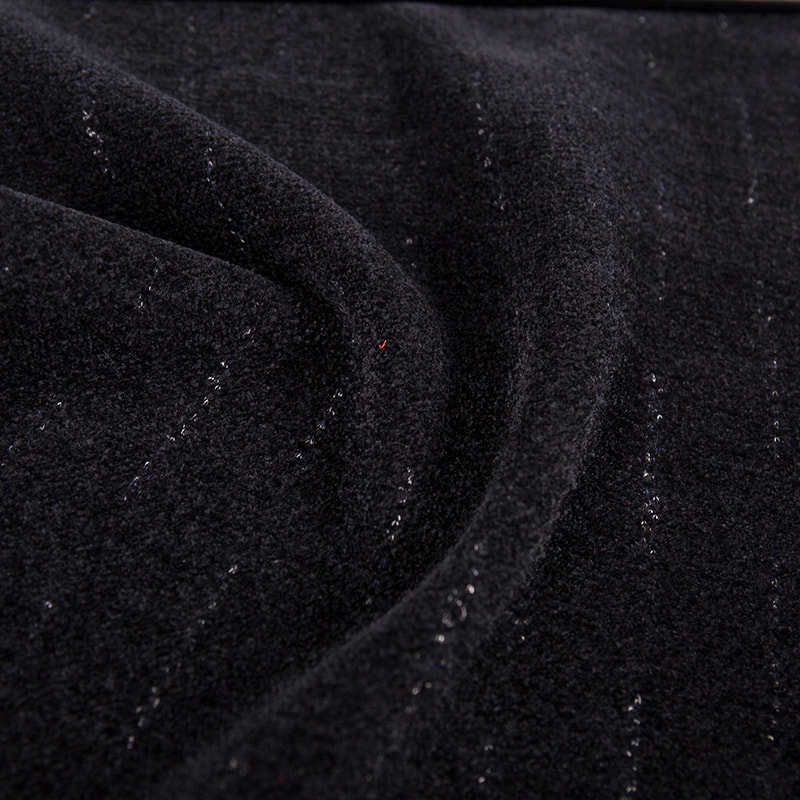
- Metallic yarn: Flat or round core yarn wrapped with aluminum foil or metallized polyester film strip (typically 0.05–0.20 mm width) to create a reflective, high-luster effect. Core: polyester, nylon, or cotton. Used as accent yarn in jacquard fabrics, eveningwear, and decorative home textiles. Metallic yarn has specific processing requirements: low twist tension on weaving/knitting machines to avoid film cracking; no high-temperature finishing that causes film delamination.
3.2 Structural Yarn Classification: Singles, Ply, and Cabled
Beyond fancy constructions, understanding the structural classification of raw yarn — singles, ply, and cabled — is fundamental to fabric specification:
- Singles yarn (1/Ne, 1/Nm): Single strand produced directly from the spinning frame. Lower production cost, but higher torque imbalance (tendency to kink and snarl when relaxed), lower tenacity per unit weight than ply equivalent. Used in knitting applications (where stitch structure stabilizes the yarn) and in weaving where the fabric construction itself provides dimensional stability.
- 2-ply yarn (2/Ne, 2/Nm): Two single yarns twisted together in the opposite twist direction to their component singles (S/Z or Z/S twist balance). Produces a balanced, dimensionally stable yarn with higher tenacity (typically 15–25% above two equivalent singles) and better uniformity. Standard specification for warp yarn in high-quality woven fabrics — the additional tenacity reduces warp breaks in weaving and improves fabric durability. 2-ply cotton Ne 60/2 (written 2/60Ne or 60/2Ne) is the standard specification for fine shirting warp yarn.
- Cabled yarn (multi-ply): Three or more single yarns, or two or more ply yarns, twisted together. Used in industrial and technical textile applications where maximum tenacity is required (canvas, webbing, rope, heavy upholstery). 3-ply and 4-ply cotton or wool yarn used in chunky knitwear and rug production.
Section 4: Dyed Raw Yarn — Color Science and Process Engineering
4.1 Yarn Dyeing Systems: Technology Comparison
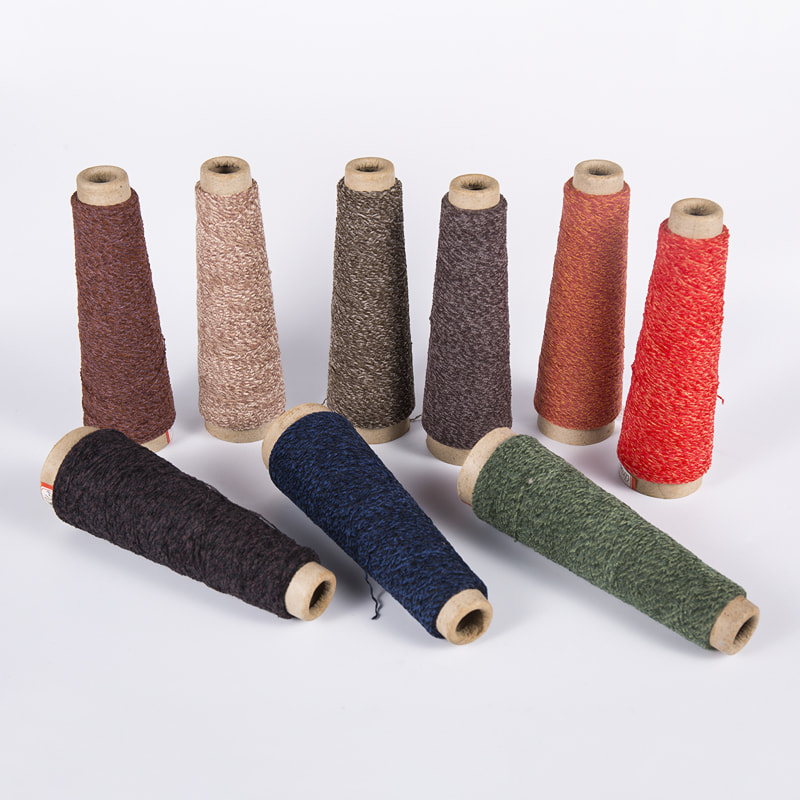
Dyed raw yarn wholesale procurement requires an understanding of the dyeing process used — which determines color uniformity, fastness performance, achievable color range, and minimum order economics. Four primary yarn dyeing technologies are used commercially:
- Package dyeing (cheese dyeing): Yarn wound onto perforated plastic or stainless steel packages (typically 1.5–3.0 kg per package). Packages loaded onto spindles in a pressurized dyeing vessel. Dye liquor circulated inward-to-outward and outward-to-inward through the package under temperature and pressure control. Package winding density (g/cm³) is the critical variable: too dense causes dye liquor channeling and uneven penetration (inner-outer shade difference); too loose causes package deformation and yarn displacement under liquor pressure. Optimal density: 0.32–0.42 g/cm³ for cotton; 0.28–0.36 g/cm³ for textured polyester. Package dyeing is the most widely used method for dyed raw yarn production — suitable for ring-spun, rotor-spun, and air-jet yarns across all fiber types.
- Hank (skein) dyeing: Yarn wound into loose skeins (hank circumference 1.5–1.8 m, weight 100–500 g per hank) and immersed in open dyebath or pressurized hank dyeing vessel. Produces the most uniform dye penetration of any method (no package density variable), but requires re-winding from hank to cone or cheese after dyeing — introducing potential for yarn damage and contamination. Preferred for fine-count, delicate yarns (silk, fine wool, cashmere) where package winding pressure would damage fiber structure. Also preferred for specialty fancy yarns (bouclé, slub) where package winding would deform the yarn structure.
- Beam dyeing: Yarn wound onto perforated sectional beam (typically 200–600 kg yarn per beam). Dye liquor circulated through the beam in a pressurized vessel. Used for large-volume, uniform-count warp yarn production where consistent lot-to-lot color matching is critical. Lower liquor-to-goods ratio (1:4–1:8 vs. 1:8–1:15 for package dyeing) reduces water and chemical consumption per kg of yarn dyed — an environmental and cost advantage for high-volume production.
- Space dyeing (multicolor yarn): Yarn passed through multiple dye application stations in sequence, applying different colors at intervals along the yarn length. Produces multicolor effect yarn with defined color repeat — used in fashion knitwear, carpet, and decorative fabric constructions where multicolor surface patterns are created from a single yarn. Color repeat length: typically 10–200 cm depending on pattern design requirements.
4.2 Dye Class Selection by Fiber Type
The dye class used for dyed raw yarn production is determined by fiber chemistry — the dye must form a stable bond with the fiber substrate to achieve required color fastness. Incorrect dye class selection is the primary cause of colorfastness failure in textile products:
| Fiber Type |
Primary Dye Class |
Dyeing Conditions |
Wash Fastness (ISO 105-C06) |
Light Fastness (ISO 105-B02) |
| Cotton, viscose, linen |
Reactive dyes |
40–80°C, alkaline (pH 10–11.5), NaCl/Na₂SO₄ exhaustion |
Grade 4–5 |
Grade 4–5 |
| Wool, silk, nylon |
Acid dyes (leveling, milling, metal-complex) |
40–100°C, acidic (pH 3.5–6.5), formic/acetic acid |
Grade 3–5 (class dependent) |
Grade 4–6 |
| Polyester |
Disperse dyes |
130°C, pressurized vessel (HT dyeing), or carrier dyeing |
Grade 4–5 |
Grade 5–7 |
| Acrylic |
Basic (cationic) dyes |
95–100°C, acidic (pH 3.5–4.5), controlled rate of exhaustion |
Grade 3–4 |
Grade 5–7 |
| Polyester/cotton blend |
Disperse + Reactive (two-bath or one-bath two-step) |
130°C for polyester phase, then 60–80°C for cotton phase |
Grade 4 |
Grade 4–5 |
4.3 Color Fastness Standards and Testing Requirements
For dyed raw yarn wholesale procurement serving international markets, the following minimum color fastness specifications are standard requirements — deviations indicate either incorrect dye class selection, insufficient dye fixation, or inadequate post-dyeing wash-off of unfixed dye:
- Wash fastness (ISO 105-C06): Minimum Grade 4 change in shade and Grade 3–4 staining on adjacent multifiber (cotton, nylon, polyester, acrylic, wool, silk). Grade 3 or below is commercially unacceptable for apparel and home textiles in EU/US markets.
- Light fastness (ISO 105-B02, xenon arc): Minimum Grade 4 for indoor textiles; minimum Grade 5 for outdoor-exposure products. Reactive-dyed cotton at Grade 3–4 is the most commonly cited fastness limitation in home textile complaints — particularly for window treatments and upholstery fabrics exposed to indirect daylight.
- Rubbing fastness (ISO 105-X12, crockmeter): Minimum Grade 3 dry rub; Grade 2–3 wet rub for standard apparel. Lower wet rub fastness on deep-shade reactive-dyed cotton (navy, black, burgundy) is a known industry challenge — addressed through selection of bifunctional reactive dyes with higher bond stability and optimized wash-off protocols.
- Perspiration fastness (ISO 105-E04): Minimum Grade 3–4 for both acid (pH 3.5) and alkaline (pH 8.0) perspiration tests. Critical for skin-contact apparel fabrics — perspiration fastness failures cause visible dye migration onto lighter adjacent fabrics and skin staining in consumer use.
- REACH Annex XVII restricted azo dyes: 22 aromatic amines released by reductive cleavage of azo dyes are restricted in EU textiles at >30 mg/kg per EN ISO 14362-1. Non-compliant azo dyes (benzidine-based, particularly in reactive blacks and direct blacks) must be replaced with compliant alternatives. This is a mandatory legal requirement for textile products placed on the EU market — not a voluntary standard.
Section 5: Chenille Raw Yarn for Upholstery and Apparel — Technical Specifications
5.1 Chenille Yarn Construction Engineering
Chenille raw yarn for upholstery and apparel is among the most technically complex yarn categories produced by specialist mills. The construction parameters that define chenille yarn performance:
- Pile fiber specification: Fiber type (acrylic 2–4 dtex, viscose 1.7–3.3 dtex, polyester 1.5–3.0 dtex, cotton); fiber cut length (3–10 mm — shorter pile produces finer, denser surface; longer pile produces softer, more open pile); fiber cross-section (round, trilobal, hollow — trilobal and hollow fibers increase pile luster and bulk per unit weight).
- Core yarn specification: Core twist level determines pile fiber retention — higher core twist locks pile fibers more securely against lateral extraction. Standard core: 2-ply polyester or cotton, Ne 20/2–40/2, TM 3.5–4.5. Core twist direction and binder yarn configuration (V-wrap or figure-8 wrap) are the primary structural variables affecting pile shedding resistance.
- Pile density (tufts per cm): Determined by the pitch of the ground yarn wraps before cutting — typically 40–100 tufts/cm for apparel chenille, 60–120 tufts/cm for upholstery grade. Higher density produces a more luxurious, closed-pile surface with better abrasion resistance; lower density produces a softer, more open surface with lower cost.
- Linear density (Ne or Nm): Chenille yarn count range: Ne 0.5–8 (coarse to medium). Total yarn weight per unit length is dominated by pile fiber weight — a Ne 3 chenille yarn may contain 70–80% pile fiber by weight and only 20–30% core. Yarn count must be specified as nominal count, not calculated from fiber content alone, due to the complex cross-section geometry.
5.2 Performance Requirements for Upholstery vs. Apparel Chenille
The performance specification diverges significantly between chenille raw yarn for upholstery and apparel applications:
- Upholstery grade: Abrasion resistance is the critical parameter — upholstery fabric is subject to 50,000–100,000+ Martindale cycles in standard testing for commercial contract furniture (UK standard BS 3379: 40,000 cycles minimum; EN 15702 for contract seating: 100,000 cycles). Pile fiber must be acrylic or polyester (not viscose) for durability. Pile shedding (pile fiber loss from the fabric surface) measured by EN ISO 12945-1 or adapted methods must be Grade 3 minimum after 2,000 Martindale cycles. Flame retardancy (FR) is mandatory for contract upholstery in EU (EN 1021-1 and EN 1021-2 cigarette and match tests) and UK (BS 5852).
- Apparel grade: Softness, drape, and colorfastness dominate over abrasion resistance. Viscose pile (finer, softer than acrylic) is preferred in fashion chenille for womenswear, scarves, and knitwear where maximum softness justifies the lower durability trade-off. Colorfastness to dry cleaning (ISO 105-D01) becomes relevant for structured fashion garments. Pilling and snagging resistance (ISO 12945-1 and ISO 12945-3) are primary consumer complaint drivers for apparel chenille.
Section 6: Quality Testing Framework for Raw Yarn Suppliers for Fabric Production
6.1 Yarn Physical Property Testing
A complete quality assurance protocol for raw yarn suppliers for fabric production covers the following physical property tests — each with defined acceptance criteria based on fiber type, count, and end-use application:
- Yarn count (linear density) — ISO 7211-5 / ASTM D1059: Count deviation tolerance: ±2.0% for warp yarn (tighter tolerance required to maintain fabric sett consistency); ±3.0% for weft yarn. Count CV% (coefficient of variation): <1.5% within lot for ring-spun; <2.0% for rotor-spun. Count deviation causes visible weft bars (filling streaks) in woven fabric — the most visually conspicuous weaving defect and one of the primary causes of fabric lot rejection.
- Yarn tenacity and elongation — ISO 2062 / ASTM D2256: Single-end breaking force and elongation at break measured on a CRE tensile tester (gauge length 500 mm; test speed 500 mm/min). CV% of breaking force: <8% for ring-spun; <12% for rotor-spun. Low breaking force uniformity causes high warp break rates in weaving — directly increasing production cost and fabric defect rate.
- Yarn evenness (Uster uniformity) — ISO 16549 / Uster Statistics: U% (mean deviation from mean linear density): <10% for ring-spun combed cotton Ne 30; <14% for ring-spun carded; CV%m (mass variation): <12–16% depending on count and fiber. Thin places (−50% threshold) and thick places (+50% threshold) per 1,000 m: <5 for premium yarn; Neps per 1,000 m: <30 for combed cotton. Uster Statistics reference values (published biannually) provide industry percentile benchmarks for yarn quality — specification at "Uster 25%" means performance better than 75% of global production at equivalent count.
- Twist — ISO 2061 / ASTM D1422: Twist per meter (TPM) or twist per inch (TPI). Twist CV%: <4.0% for ring-spun. Unbalanced twist in 2-ply yarn (S-twist bias or Z-twist bias from differential single-yarn twist) causes bowing in woven fabric — a geometric defect that cannot be corrected in finishing.
- Hairiness — ISO 13938 (Uster Tester method): H-value (total projecting fiber length per unit length of yarn): <4.0 for ring-spun Ne 30 combed cotton; lower values for compact ring-spun variants. High hairiness causes fabric pilling, reduced color clarity in printed fabrics, and weaving shed contamination in high-speed weaving.






 English
 Español