2026-02-17
Content
The journey of any textile, from a delicate knit scarf to durable denim jeans, begins with a single, fundamental component: yarn. At the very origin of this journey lies raw yarn. This term, while seemingly straightforward, encompasses the essential, unadorned thread that serves as the canvas for endless creativity and industrial production. Understanding what is raw yarn made of and its various forms is crucial for everyone from hobbyist weavers and knitters to fashion designers and bulk manufacturers. Raw yarn represents the first transformation of fibers—whether plucked from a plant, sheared from an animal, or synthesized in a lab—into a continuous strand capable of being woven, knitted, or otherwise constructed into fabric. Its characteristics, such as fiber content, thickness, and twist, set the foundational parameters for the final product's strength, texture, drape, and behavior. For professionals in the textile industry, mastery over raw materials is the first step in quality control. As an integrated manufacturer with decades of experience spanning spinning, dyeing, and weaving, we operate at this very intersection, transforming raw materials into specialty yarns and fabrics. This guide will unravel the complexities of raw yarn, providing a clear, professional resource for anyone looking to deepen their knowledge of this primary textile building block.
The composition of raw yarn is its defining feature, directly dictating its properties, cost, and ideal applications. The term "raw" often signifies that the yarn is in its natural, untreated, or undyed state, but it fundamentally refers to the base material. These materials are broadly categorized into three groups, each with distinct origins and characteristics. Natural fibers come from plant or animal sources and are celebrated for their breathability, comfort, and biodegradability. Synthetic fibers are engineered from petrochemicals, offering exceptional strength, durability, and functional properties like elasticity and moisture-wicking. Regenerated fibers strike a balance, derived from natural cellulose (like wood pulp) but processed chemically to create a new filament. Choosing the right fiber is the most critical decision in textile creation, as it influences everything from the hand feel and care instructions to the environmental footprint of the finished item.
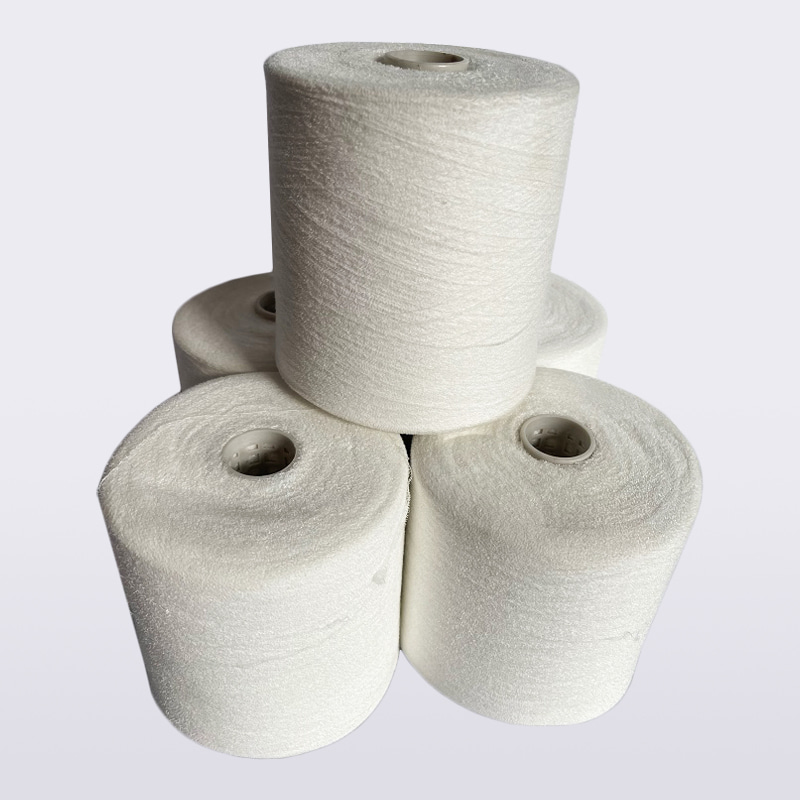
Beyond fiber content, raw yarn comes in different structural forms. Staple fiber yarn is made by twisting together short lengths of fiber, creating a fuzzy, porous yarn with good insulation (e.g., cotton, wool yarns). Filament yarn consists of one or very long, continuous filaments, resulting in a smooth, strong, and lustrous yarn (e.g., silk, polyester filament). The thickness or fineness of yarn is measured by its count (e.g., Ne, Nm, Denier), which is a vital specification for matching yarn to the intended fabric weight and machinery.
A common point of confusion in textile terminology is the raw yarn vs spun yarn difference. In many industry contexts, these terms can overlap, but a key distinction exists. "Raw yarn" often broadly refers to yarn that has not undergone finishing processes like dyeing, bleaching, or mercerization. It is yarn in its basic, "as-spun" condition. "Spun yarn" specifically refers to yarn that has been created through the spinning process, where staple fibers are drawn out, twisted, and wound to create a cohesive, continuous thread. Therefore, all spun yarn starts as a form of raw yarn, but not all raw yarn is exclusively made via staple fiber spinning (e.g., filament yarns are extruded, not spun). Understanding this nuance is essential for clear communication with suppliers and for selecting the correct material for a project, as the production method significantly affects the yarn's texture, strength, and cost.
In professional settings, raw yarn typically means greige yarn (grey yarn). It is yarn that has been spun (or extruded) but has not been bleached, dyed, or otherwise chemically treated. It may contain natural impurities, waxes (like in raw cotton), or sizing agents applied to facilitate weaving. It is the standard output of a spinning mill, ready to be sent for further processing.
Spun yarn is the product of aligning staple fibers and inserting twist to bind them together using a spinning frame. This process can vary (ring spinning, open-end spinning, air-jet spinning) to create yarns with different characteristics. The term "spun" emphasizes the manufacturing technique.
| Aspect | Raw Yarn (Greige) | Spun Yarn (Finished) |
| State | Undyed, unbleached, may contain natural oils/sizing. | Often dyed, bleached, or otherwise finished; ready for end-use. |
| Appearance | Natural, off-white, beige, or grey color; duller sheen. | Any color; can have enhanced luster (e.g., mercerized cotton). |
| Absorbency | May be lower due to natural waxes. | Higher, especially after scouring and bleaching. |
| Primary Use | Intended for further industrial processing (dyeing, weaving). | Ready for direct use in knitting, weaving by crafters or manufacturers. |
| Cost | Generally lower, as it excludes finishing costs. | Higher, reflecting the added value of coloration and treatment. |
For weavers, knitters, and small-scale producers, finding the right source is key. Knowing where to buy raw yarn for weaving and other crafts depends heavily on the scale of your project, your required fiber specifications, and your budget. The sourcing landscape ranges from small retail outlets catering to hobbyists to large-scale industrial suppliers. For a hobbyist experimenting with natural dyeing, a small skein of undyed wool from a local store is perfect. For a designer producing a small capsule collection, a wholesaler or online platform offering cones of yarn at lower minimums is ideal. For commercial production runs, establishing a direct relationship with a spinning mill or a large-scale supplier becomes necessary to ensure consistency, competitive pricing, and reliable logistics. Each channel offers different levels of customization, support, and accessibility.
The process of how to dye raw yarn at home is a rewarding endeavor that unlocks complete creative freedom, allowing crafters to produce truly unique, custom-colored materials. Dyeing raw yarn—especially in its undyed, natural state—is often more successful than dyeing a commercially pre-dyed yarn, as the fibers are more receptive to colorants. The key is understanding the chemistry between the dye type and the fiber content. Protein fibers like wool and silk require acid dyes, which bond in an acidic environment. Cellulose fibers like cotton and linen work best with fiber-reactive dyes, which form a covalent bond with the fiber for exceptional wash-fastness. For those seeking an organic approach, natural dyes from plants, insects, and minerals offer a sustainable, though often less colorfast, alternative. Safety, preparation, and patience are the cornerstones of successful home dyeing.
Before dyeing, yarn must be thoroughly scoured to remove oils and dirt, ensuring even dye uptake. For many natural dyes and some synthetics, a mordant (a metallic salt like alum) is necessary to fix the color to the fiber. Always work in a well-ventilated area, wear gloves and a mask when handling dye powders, and use dedicated pots and utensils.
Sourcing raw cotton yarn suppliers wholesale is a strategic business decision that impacts product quality, cost structure, and supply chain stability. For manufacturers of towels, t-shirts, denim, or home textiles, a reliable supply of consistent, high-quality raw cotton yarn is non-negotiable. Wholesale purchasing involves evaluating suppliers not just on price, but on their ability to deliver uniform yarn counts, maintain tensile strength specifications, provide certifications (like Oeko-Tex or organic), and guarantee on-time delivery. Factors like the cotton's origin (e.g., Egyptian, Supima, Upland), the spinning technique (ring-spun vs. open-end), and the yarn's preparation (combed for smoothness, carded for a rustic feel) must be precisely aligned with the final fabric's requirements. Building a partnership with a capable supplier mitigates risk and ensures a smooth production flow.
Wholesale markets typically offer: Carded Cotton: A more economical option, slightly hairier and less uniform. Combed Cotton: A premium option where shorter fibers are removed, resulting in a smoother, stronger, and more lustrous yarn. Organic Cotton: Grown without synthetic pesticides, requiring specific certification tracking. Various Yarn Counts: From coarse counts for heavy canvases to fine counts for lightweight voiles.
In the most common industry usage, yes. The term raw yarn is largely synonymous with undyed, greige yarn. It refers to yarn that has not undergone any coloration process after spinning. However, it's important to note that the fibers themselves may have a natural color (like brown cotton or grey wool), so "undyed" doesn't necessarily mean pure white.
This is a vital distinction for fiber artists. Raw yarn is a spun, twisted, continuous thread ready for weaving or knitting. Roving (or top) is an earlier stage in the processing chain. It is a long, narrow bundle of aligned fibers that has no twist. Roving is intended to be spun into yarn on a spinning wheel or spindle. Using roving directly in knitting often results in a fragile, drafty fabric that can pull apart easily.
You can, but with important considerations. If the raw yarn is a commercially spun (but undyed) yarn, then yes, it is perfectly suited for knitting or crochet. However, if it is truly "raw" and still contains natural waxes or sizing agents (common in industrial greige yarn), the hand feel may be stiff or waxy, and it might not behave like the softened, finished yarns found in craft stores. It may also shrink or change after its first wash when these substances are removed.
Proper storage is critical, especially for natural fiber raw yarn. Store in a cool, dry, and dark place to prevent moisture absorption, mold, and UV fading. Use sealed plastic bins with lids to protect from dust, insects (like moths), and pests. Avoid storing in attics or basements with extreme temperature and humidity fluctuations. For long-term storage, avoid keeping yarn in tight balls; keep it in its original skein or cone form to prevent tension on the fibers.
Yes, in industrial textiles, greige yarn (pronounced "grey") is the standard term for what is commonly called raw yarn. It describes yarn that has been spun or extruded but has not been bleached, dyed, or finished. The name comes from its typically natural, off-white, or greyish color. It is the intermediary product shipped from spinning mills to dye houses or fabric mills for further processing.
Related Products

© 2024 Suzhou Aodejia Textile Technology Co., Ltd. All Rights Reserved.





 English
 Español