2026-10-01
Content
Bouclé has moved from seasonal novelty to structural necessity in winter coat manufacturing. For textile converters, curly yarn is more than a textural accent; it is a load-bearing component that determines warmth, drape, durability, and cost. This technical guide explains why curly yarn (bouclé) has become the top choice for winter coat textures and what you need to evaluate at every stage of conversion.
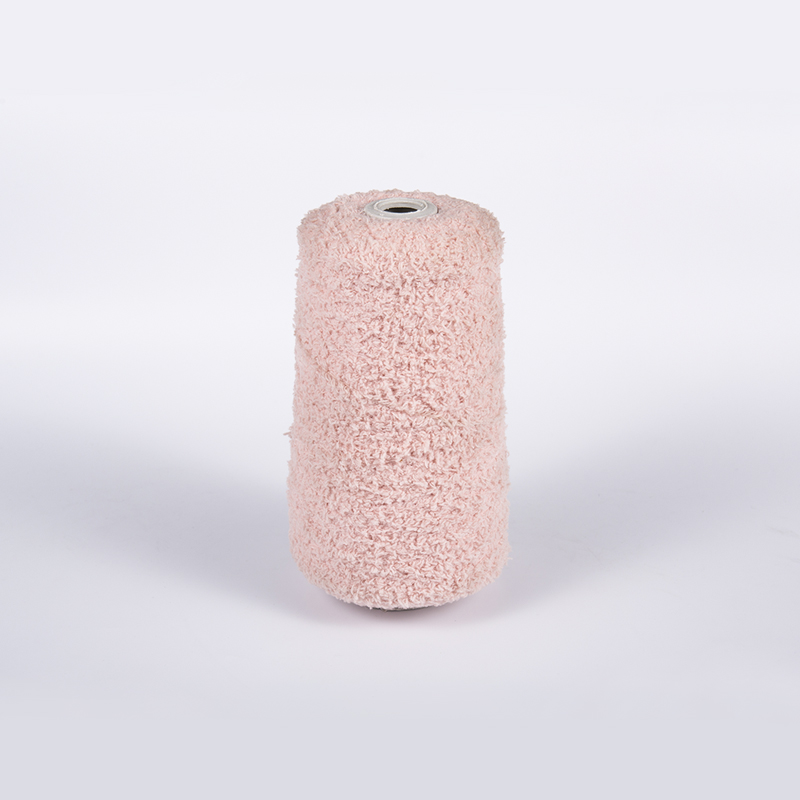
Curly yarn, widely known in the industry as bouclé, is a fancy yarn produced with a distinct looped or curled surface. Its name comes from the French word for a small loop, and the structure itself originates from feeding a soft, wavy effect strand at a faster rate than the core strand, allowing it to buckle out in irregular coils. A binder strand then locks the loops in place.
The result is a yarn with visible, tactile loops along its entire length. When knitted or woven into a coat fabric, those loops create a raised, softly textured surface that feels substantial without requiring heavy weight. This combination of volume, heat retention, and surface interest is exactly why winter coat converters are specifying bouclé at growing rates.
For a deeper look at how the yarn behaves through knitting and finishing, see our earlier analysis of curly yarn weaving techniques and fabric comfort.
Winter coat fabrics must balance warmth, hand feel, drape, and durability. Bouclé answers each of these demands with a structure that is difficult to replicate in flat yarns.
Each loop traps still air in small pockets. Still air is one of the best natural insulators, which means a bouclé fabric can deliver coat-level warmth at a lower fabric weight.
The coiled structure acts like a set of tiny springs. After compression, the loops push back, helping the fabric recover its shape and resist unwanted creasing.
The irregular loop surface scatters light in multiple directions, giving coats a rich, dimensional appearance that flat-surface fabrics cannot match.
Because the surface is already textured, minor seam or assembly irregularities become visually invisible, which is a practical advantage during conversion.
Converters also appreciate the styling flexibility. By changing loop height, twist level, or the proportion of effect fiber, a mill can develop everything from a subtle micro-loop suiting for men's overcoats to a dramatic high-loop style for fashion outerwear.
When converting bouclé yarn into winter coat fabric, the following parameters decide both appearance and technical performance. They must be specified and verified at the yarn stage.
| Parameter | Typical Range for Coat Fabric | Impact on Finished Fabric |
|---|---|---|
| Loop height | 3-9 mm (compact to large) | Higher loops increase loft and coverage |
| Yarn count | 1-4 Nm (thick bouclé) | Thicker bouclé builds warmth faster |
| Twist level | Medium to high for the binder | Prevents loops from pulling out |
| Fiber blend | Wool, polyester, nylon, acrylic | Controls softness, luster, and wear |
Loop uniformity deserves special attention. If the loop size varies too much across the yarn length, the finished fabric will develop uneven patches that are difficult to hide even after brushing or steaming. A converter should set a clear tolerance with the yarn supplier and check loop distribution on a sample board before bulk production.
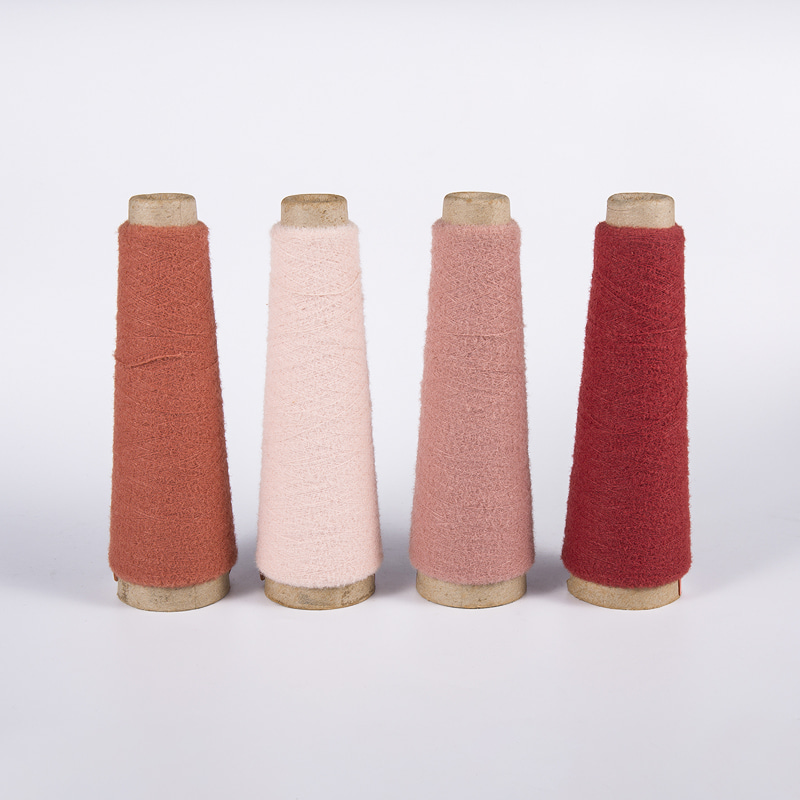 Nylon Curly Hairy Shiny Yarn in Three Loop SizesThis nylon yarn offers curly, glossy loops in 0.4cm, 0.9cm, and 1.0cm sizes, providing options for controlling texture and warmth in bouclé coatings.View Product →
The base fiber of a bouclé yarn determines how the final coat feels, drapes, and performs over time. Each fiber brings distinct properties to the loop structure.
Wool Natural wool adds crimp, resilience, and moisture management. Because wool fibers naturally coil, they reinforce the loop geometry of bouclé and enhance thermal insulation.
Polyester Polyester provides strength, abrasion resistance, and shape retention. Loop yarns with a polyester core keep their curls through repeated washing and wear, which is essential for mass-produced winter garments.
Nylon Nylon contributes elasticity and toughness. A nylon-based curly yarn can survive aggressive brushing and napping during finishing, making it a frequent choice for high-pile coat textures.
Acrylic Acrylic delivers wool-like bulk at a lower cost. It is widely used in affordable winter coats and hand-knitted outerwear because it holds loops well and dyes into deep, consistent colors.
Most coat-grade bouclé uses a blend rather than a single fiber. A typical construction may use a polyester core for stability, a nylon effect strand for curly texture, and a small percentage of wool or viscose for hand feel. Blending also gives converters more levers to adjust price, weight, and care requirements. For example, the bouclé loop yarn used in knitting combines a soft looped surface with good stitch definition, making it suitable for both garment fabric and open-knit designs.
 Boucle Polyester Loop Yarn for KnittingA polyester loop yarn with a soft, elastic loop structure suitable for sweaters, scarves, and home textiles, offering wrinkle resistance and reliable warmth for winter garments.View Product →
The first point of control is the spinning stage. The effect yarn feed speed must be synchronized with the core and binder so that loops are regular in direction and height. Check the twist level at the binding point; too much twist stiffens the fabric, and too little allows loops to slip out.
Through knitting or weaving, the highest risk is loop distortion. Bouclé is bulky and the loops can be crushed by machine tension. Use a relaxed feeding path, moderate take-up tension, and larger knitting needles or weaving reed openings. After the fabric is formed, a gentle brushing or steaming pass stabilizes the loop direction and adds the final hand feel.
Quality checks should include loop density per unit area, dimensional stability, pilling resistance, and colorfastness under low-temperature washing. These tests are especially important when the fabric will be cut and sewn by converters, because any structural fault becomes much harder to repair once panels are cut. A mature mill runs these procedures routinely and documents the results for traceability, so the converter can move from sample approval to bulk production with confidence.
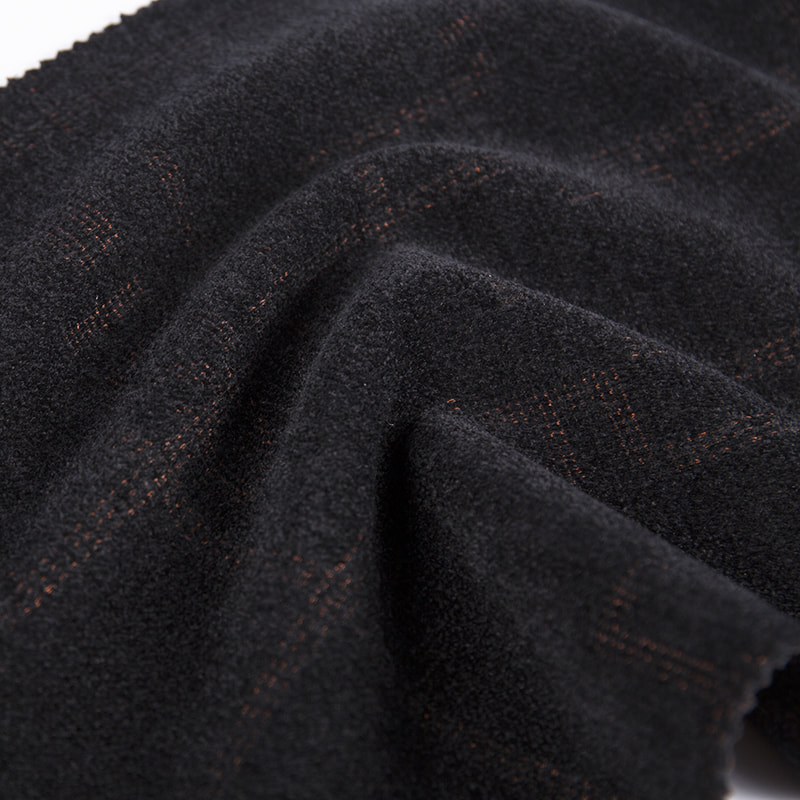
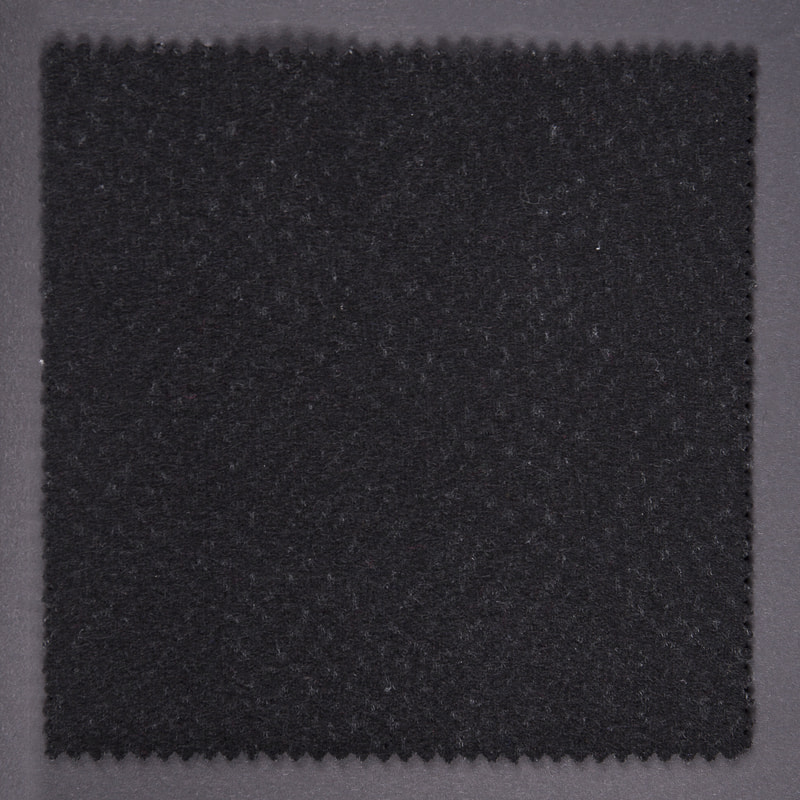 Wool/Polyester Knit Plaid Fleece Fabric for Winter CoatsThis plaid fleece knit fabric blends wool and polyester for a winter coat application, combining heat retention with pliability for converter-friendly cutting and sewing.View Product →
For a converter, the ideal bouclé partner is a supplier that controls both spinning and fabric production, because this shortens the feedback loop. When evaluating a supplier, confirm that they can handle OEM and ODM development, produce sample boards quickly, and maintain traceable records for raw materials and quality checks.
At Suzhou Aodejia Textile Technology, the production system spans curly yarn, dyed yarn, knitted fabrics, and woven fabrics, which means the converter can source the yarn and the finished winter coat fabric from the same accountable team. This vertical setup shortens communication, simplifies logistics, and makes quality control more transparent.
Curly yarn and bouclé refer to the same family of fancy yarns. Bouclé is the traditional French term, while curly yarn is the descriptive English name. Both describe a yarn with visible loops or curls along its surface.
A blend with polyester or nylon for strength and wool or viscose for hand feel is common. The exact ratio depends on target weight, budget, and care instructions. Nylon-cored curly yarns are especially good for brushed winter textures.
Bouclé fabric requires some adjustment in cutting and sewing because the looped surface can shift. Use a walking foot or a roller foot, avoid overstretching the fabric during feeding, and test seam slippage on a sample panel before bulk production.
Loop size is set by the overfeed ratio of the effect yarn relative to the core yarn. A higher overfeed creates larger loops. The twist of the binder and the tension during winding also affect final loop geometry, so samples should be checked at every lot change.
Pilling depends on fiber blend, loop stability, and finishing. The surface of bouclé naturally has small protruding fibers that can fuzz, but a well-constructed yarn with sufficient twist and a strict Martindale or pilling test will maintain an acceptable appearance for the life of the coat.
Curly yarn (bouclé) earns its position at the top of winter coat textures through a combination of thermal efficiency, structural resilience, and visual richness. For converters, the key is to control loop geometry, choose the right fiber blend, and work with a supplier that understands both yarn and fabric production.
By evaluating these technical parameters and building reliable quality checks into the conversion workflow, you can deliver winter coat fabrics that perform as well on the production line as they do on the consumer's shoulders.
Related Products

© 2024 Suzhou Aodejia Textile Technology Co., Ltd. All Rights Reserved.





 English
 Español