2026-09-24
Content
Every winter garment order carries a risk that never appears on the spec sheet: socks and gloves are the most mechanically abused items in the cold-weather wardrobe, yet they are still knitted from decorative fancy yarns that were never engineered for heel friction, cuff stress, or repeated machine washing. Pilling appears within weeks, feather loops flatten against the toes, and the insulation layer thins exactly where the wearer needs it most. At Suzhou Aodejia Textile Technology Co., Ltd. (adjtex.com), a spinning and fabric mill with more than 20 years of experience in fancy yarn development, the engineering answer has become high-tensile feather yarn. High-tensile feather yarn is the top choice for winter socks and glove manufacturing because it combines the plush hand feel that consumers expect from feather yarn with a high-tenacity nylon core that holds its loops under abrasion, flexion, and laundering.
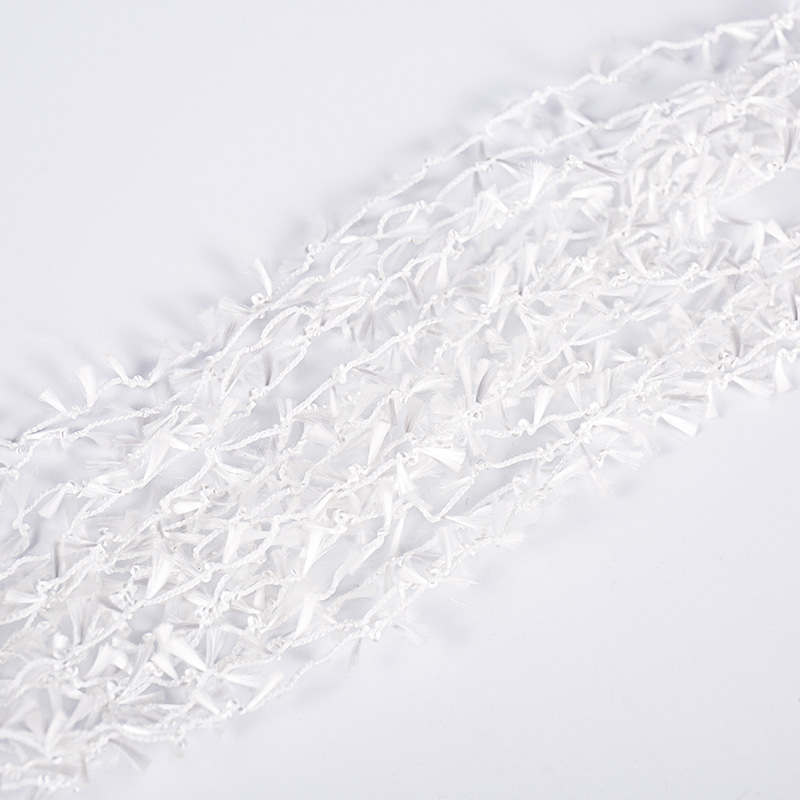
High-tensile feather yarn is a fancy yarn built around a high-tenacity core fiber, normally nylon 6 or nylon 6.6, with feather loops of 1 to 8 cm protruding from that core to create the signature fluffy surface. The difference between standard feather yarn and high-tensile feather yarn is structural, not cosmetic. Standard feather yarn typically uses an acrylic core that breaks at roughly 3.0 grams per denier. High-tensile feather yarn uses a nylon core that reaches 8.5 grams per denier, nearly three times the tensile strength, while retaining 20 to 30 percent elongation before break. That combination lets the yarn survive the tension spikes of high-speed circular knitting machines and the repeated pulling force of a hand sliding into a glove.
High-tensile feather yarn is a fancy yarn in which short feather-like pile fibers are anchored to a high-tenacity filament core, producing a soft, hairy surface with the mechanical strength of an industrial textile yarn.
Loop anchorage matters as much as core strength. A higher twist at the core fixes each feather loop in place, so the loops resist being pulled out during knitting, washing, and everyday wear. Elastic recovery is the third pillar: after a sock cuff is stretched over a calf or a glove is pulled off by the fingertips, the yarn returns toward its original length instead of bagging out.
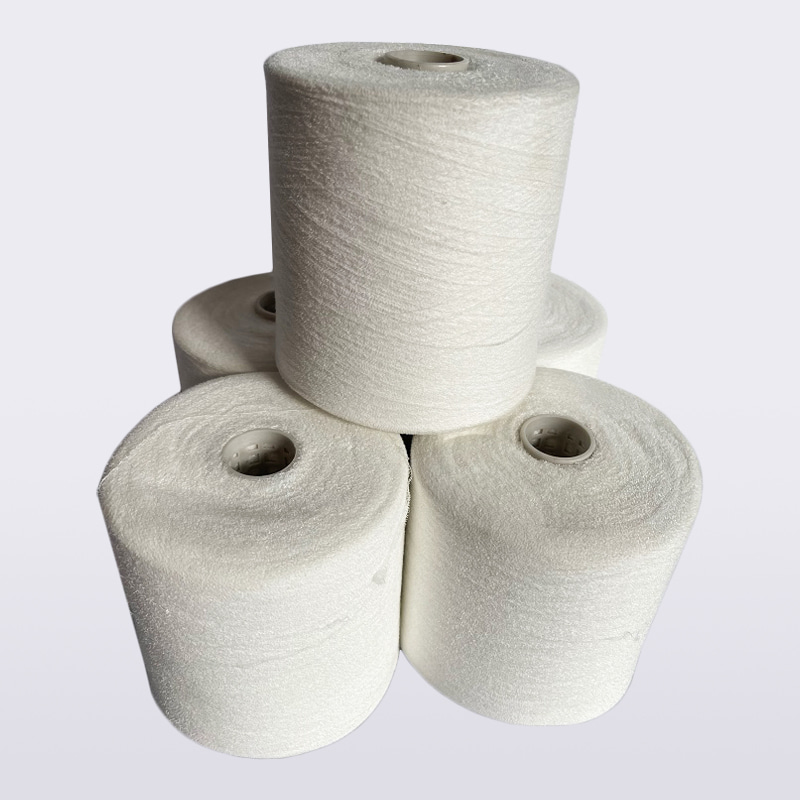
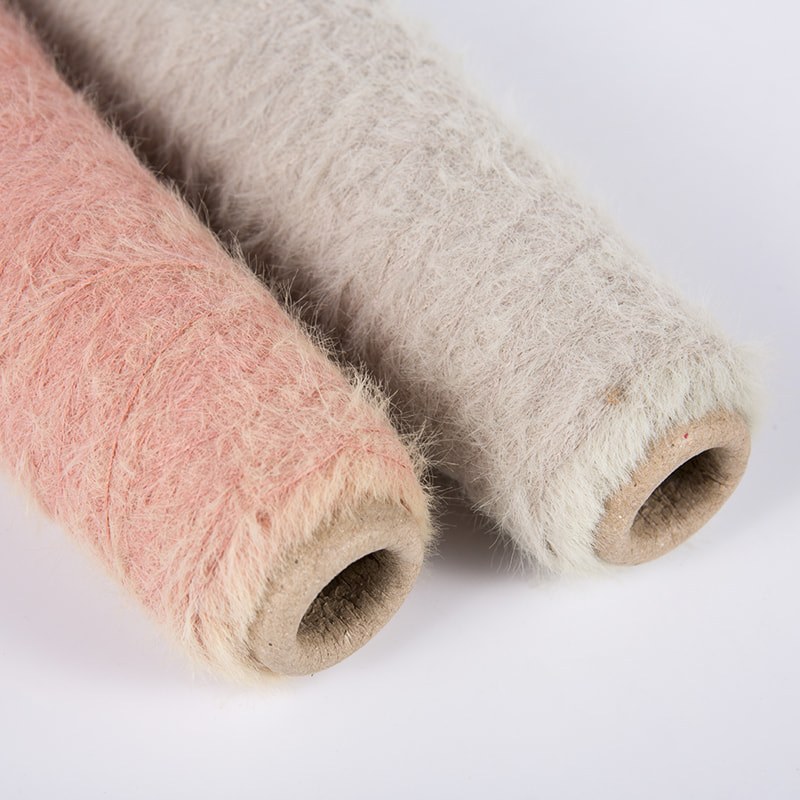 Nylon Fluffy Feather Yarn in Three Loop LengthsAvailable in 0.7, 1.3, and 1.8 cm loops, this nylon feather yarn offers strong, wrinkle-resistant resilience. Its precise spinning preserves loop anchorage and elastic recovery, making it suitable for knit cuffs, gloves, and winter accessories.View Product →
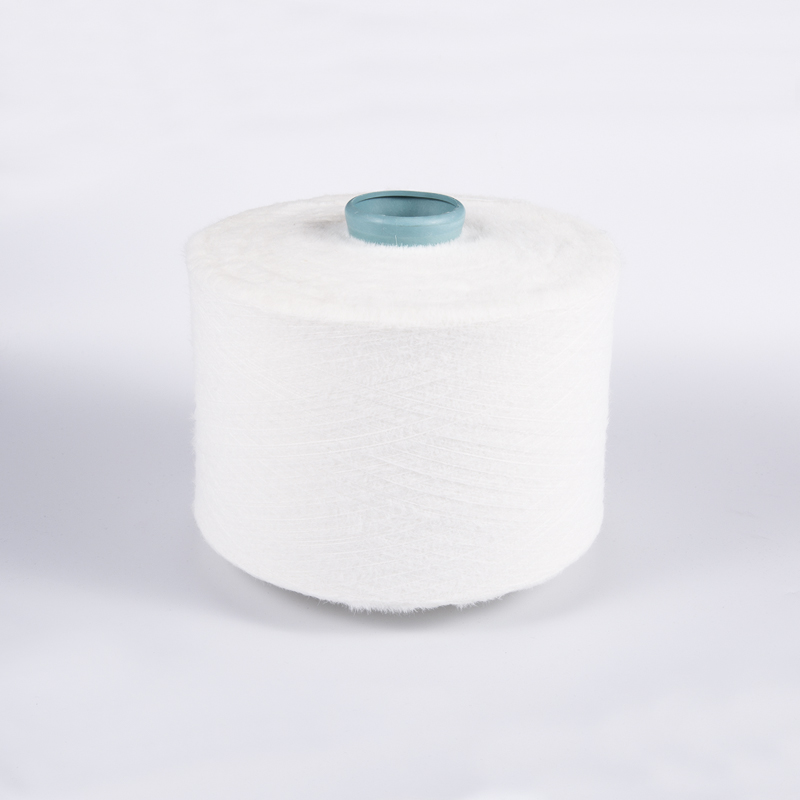
Aodejia Textile supplies high-tensile feather yarn as raw yarn and as dyed yarn. Dyed feather yarn goes through the dye bath after spinning, binding color to the fiber before it reaches the knitting machine; raw yarn gives factories full control over downstream dyeing inside their own production lines. Both routes preserve the mechanical properties of the nylon core because the strength comes from fiber chemistry and twist, not from finishing agents.
For winter socks, high-tensile feather yarn wins on three measurable fronts: heel-and-toe abrasion resistance, loop stability after washing, and insulation per gram of yarn. Sock heels and toes rub against boots, shoe counters, and the ground; the heel pocket is often the first area where a weak yarn fails. A nylon core with 8.5 grams per denier tenacity handles this contact far better than an acrylic core, which is why nylon is the standard engineering fiber in high-wear textiles.
Machine washing is the second test. Feather loops that are not firmly anchored flatten after a few wash cycles, which reduces the air layer that provides warmth. High-tensile feather yarn keeps its three-dimensional structure because the core twist holds the pile in place, and the nylon filament does not soften or relax in warm water the way acrylic and wool do.
| Property | High-tensile feather yarn | Standard feather yarn | Chenille yarn |
| Heel and toe abrasion resistance | Excellent | Fair | Good |
| Loop retention after 10 washes | Excellent | Poor | Fair |
| Warmth-to-weight ratio | High | Medium | Medium |
| Machine knitting efficiency | High | Medium | Low |
The warmth argument is about air, not thickness. Feather loops trap still air against the skin, and still air is the actual insulator. Because the nylon core carries the mechanical load, the feather pile can be tuned to a lighter density, so factories can hit thermal targets at a lower finished weight than with standard feather yarn or chenille constructions.
Glove manufacturing requires a yarn that knits cleanly at fine gauges, keeps seams thin enough to preserve fingertip dexterity, and traps still air over the back of the hand. High-tensile feather yarn meets all three requirements. Winter gloves are commonly knit on 7-to-12-gauge machines, with liners running finer at 12 to 15 gauge. On these machines, yarn breakage is the largest source of downtime, and a nylon core dramatically reduces breakage compared with low-tenacity acrylic feather yarns.
Seam quality is where high-tensile feather yarn surprises new glove manufacturers. The feather loops collapse under seam pressure, producing flat joins between fingers instead of bulky ridges. This is not a small detail: a thick seam inside a glove reduces dexterity, creates pressure points, and slows down assembly. High-tensile feather yarn also resists snagging from zippers, bag hardware, and Velcro because the loops are anchored to a filament that does not elongate and let go.
High-tensile nylon-core feather yarn
Standard acrylic-core feather yarn
For glove bodies, the 1-3 cm loop range is the practical sweet spot: the loops trap air without interfering with grip, and the finer yarn count keeps seams slim. Deeper loops in the 4-8 cm range are better reserved for cuffs, turnbacks, and fashion trims. Knitting density directly changes how much still air a glove can hold, so the balance between knitting density and clothing comfort should be tested on the actual glove silhouette before bulk production.
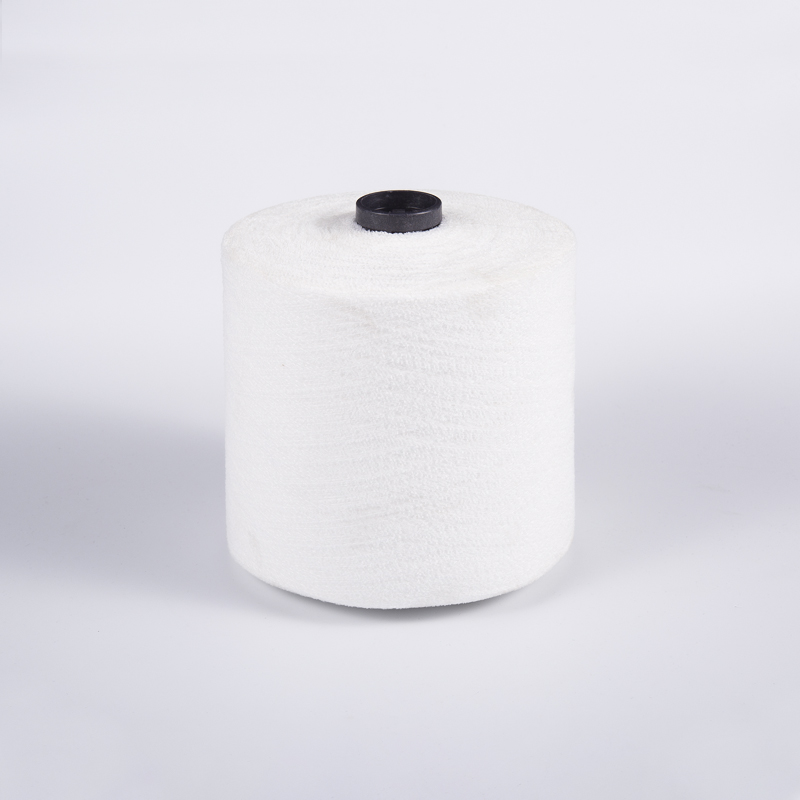
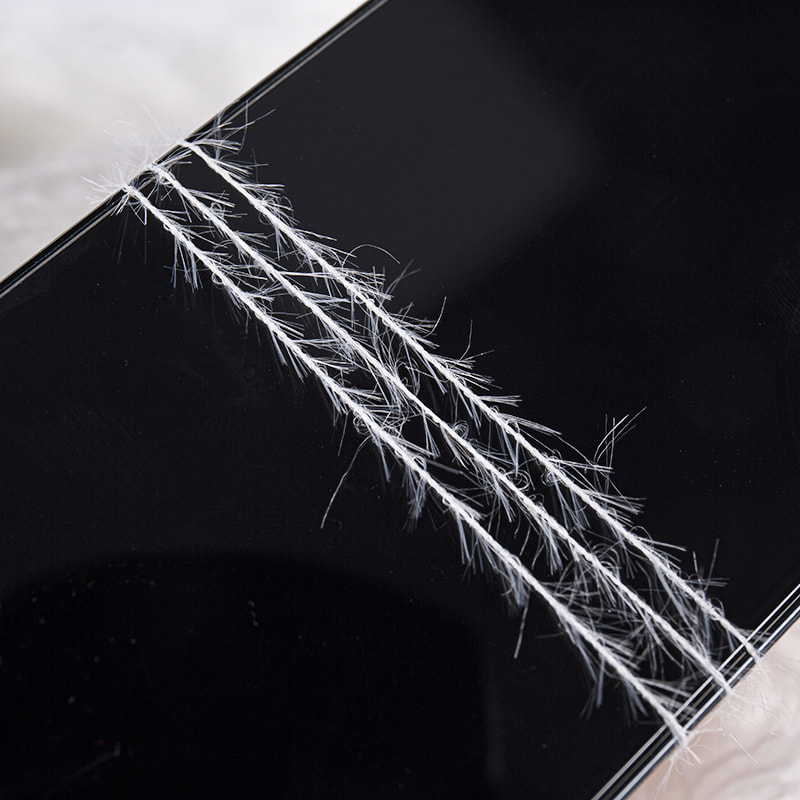 1.3cm Polyester/Nylon Hairy Yarn for KnittingThis 1.3 cm hairy yarn blends polyester durability with nylon elasticity, providing a smooth, skin-friendly touch. Its balanced strength and easy knitting make it practical for glove bodies, cuffs, sweaters, and scarves.View Product →
Before placing a bulk order, verify four things: core fiber composition, twist level, dye-lot consistency, and the supplier's OEM/ODM capacity. These four parameters decide everything from knitting performance to final color approval.
For winter accessory collections that need a festive accent, the same tensile engineering is available in sparkle feather yarn variants. A metallic shimmer on a turn-down cuff or glove back reads as a design choice rather than a material compromise, and it avoids the cost of buying a second yarn system for one trim color.
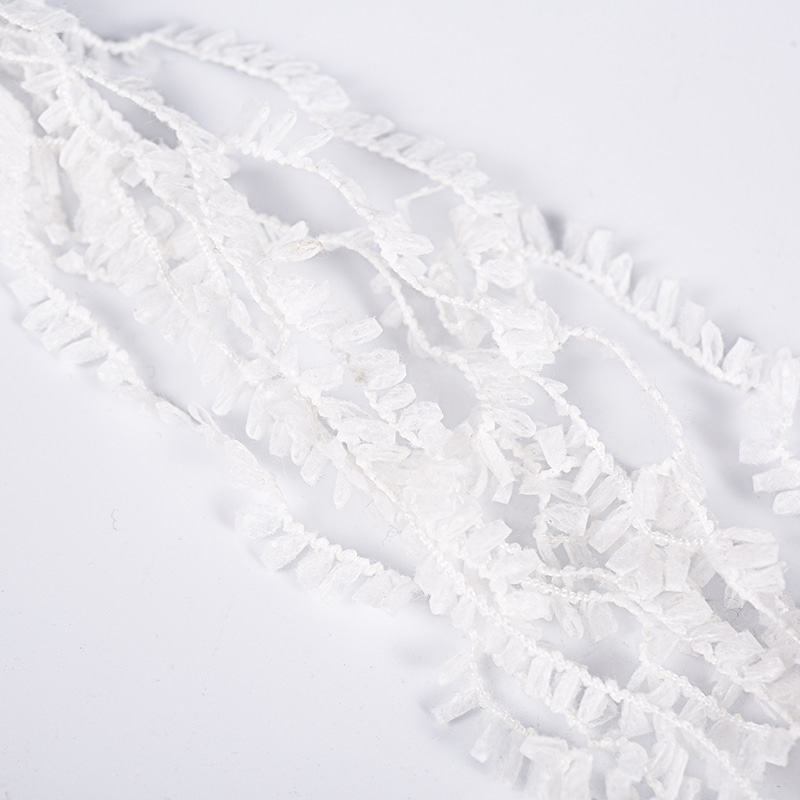
 Crystal Sparkle Feather Yarn with Sunlight ShineA polyester-viscose blend feather yarn with a metallic shimmer, designed for festive trims on winter accessories. It offers colorfastness, softness, and a flowing layered effect, ideal for cuffs, gloves, and decorative knitwear.View Product →
Feather yarn sits inside the broader fancy yarn family, which includes chenille, eyelash, curly, and boucle yarns. For a buyer moving from decorative knitting into performance winter accessories, the shift is simple: choose the fancy yarn with an engineering core.
Yes. High-tensile feather yarn is engineered for 7-to-12-gauge circular and flat knitting machines. The nylon core reduces yarn breakage, and the loop density can be adjusted to match the machine gauge and the required fabric weight.
Chenille is soft and absorbent but heavier, and its pile compresses more easily. High-tensile feather yarn delivers a higher warmth-to-weight ratio, fewer machine stops, and better loop recovery, which makes it the stronger choice for performance winter socks.
When the core is high-tenacity nylon and the twist is set correctly, feather loops stay anchored through repeated washing. Pilling in regular feather yarn is usually a sign of low twist or an acrylic core, not a limitation of the feather structure itself.
For glove bodies, use a 1-3 cm loop length on a fine-count polyester-nylon feather yarn to keep seams slim and fingertips dexterous. Reserve 4-8 cm loops for cuffs, turnbacks, and decorative panels.
Related Products

© 2024 Suzhou Aodejia Textile Technology Co., Ltd. All Rights Reserved.





 English
 Español